
Phenomenal Women of Children’s Mercy
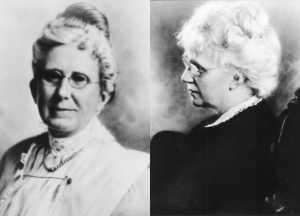
One sick little girl. Two phenomenal women…sisters. As fate would have it, the intersection of those three lives would begin a deep history of compassionate care and medical treatment for all children, everywhere, at what would become Children’s Mercy.
Dr. Alice Berry Graham, a dentist, and her sister, Dr. Katharine Berry Richardson, a physician, would care for that little girl and go on to dedicate the rest of their lives to treating thousands of children who needed medical care. With great tenacity and community help, the sisters continued to provide progressive pediatric care, conduct innovative research, train doctors and nurses and even defy the times by establishing a pediatric ward in Wheatley Provident Hospital, the first hospital in Kansas City for African Americans.
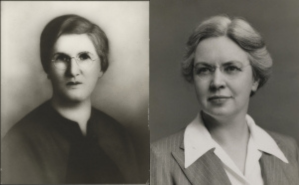
After the deaths of both sisters – Alice in 1913, Katharine in 1933 – two more phenomenal women, both nurses, would continue to lead the vital work at Children’s Mercy as hospital administrators. Janette Flanagan served from 1933-1936 and Elizabeth Martin served from 1936-1955, keeping Children’s Mercy running through both the Great Depression and World War II.
Join us during the month of March as we celebrate our founding sisters and other phenomenal Women of Mercy. Learn more about the history of Children’s Mercy.
It’s time someone took a greater interest in helping children like this. And Katharine, I think you and I are the ones to do it.
Phenomenal support: Early administrators and record-keepers of Children’s Mercy
Imagine starting a brand-new hospital today. It would be an enormous undertaking. Now, imagine what it must have taken to start a hospital in 1897! While our founding sisters started by nursing one child back to health, it’s safe to say that as the hospital grew, they needed lots of support. Here are the stories of two women who offered years of administrative and governance support that helped shape the the first 60 years of Children’s Mercy.
Phenomenal Woman of Mercy
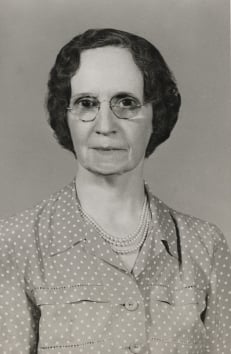
Lena Dagley
Dr. Katharine Berry Richardson was a very busy lady. And like the administrators and CEOs of today, she needed someone she could count on for support. Lena Dagley would become her confidant and serve as Dr. Richardson’s secretary. She would also collect her stories, as she understood that history was being made. Lena would go on to serve as the executive secretary for Children’s Mercy and continue documenting our history. Lena’s personal writings provided great insight into the inner workings of the early years of the hospital. She served the hospital for nearly 50 years.
In the Children’s Mercy history book “For All Children Everywhere,” author Thomas McCormally wrote that the founding sisters’ father instilled a strong sense of community service in his daughters at a young age, saying “The truly charitable woman is big enough to help children other than their own.” Regarding the importance of that influence during Alice’s and Katharine’s early years, Lena wrote: “We all know that the time to mold the habits and character of a child is during the early and formative years. And no doubt, that little thought/seed of unselfish service to other people implanted in the minds of those two little girls during the plastic period of their lives was the real beginning of Mercy Hospital."
Phenomenal Woman of Mercy
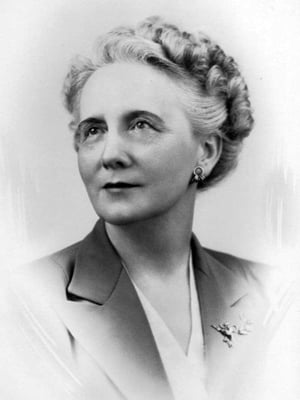
Leah Nourse
Leah’s story also is excerpted from the Children’s Mercy history book, “For All Children Everywhere”:
“Leah Nourse – an adventuresome and persistent woman in a time when women rarely took leading roles – chaired the Central Governing Board of Children’s Mercy from the later years of the Great Depression through World War II and the polio epidemic to the end of her tenure in 1956, when the hospital faced decisions about expanding services and staffing.
“She also devoted countless volunteer hours and financial support, according to her family. After stepping down from the board she continued to volunteer as the hospital historian and continued to make regular visits to help cheer and comfort patients. She is credited in the book, A History of the Children’s Mercy Hospital, 1897-1961 with active fundraising and marketing for the hospital.”
Phenomenal foundations: halls of healing, towers of love
From our earliest days, Children’s Mercy has been shaped by remarkable women whose courage, compassion and conviction changed what was possible for children. Founded by the Berry Sisters, two trailblazing women who believed every child deserved expert care and a fighting chance, our mission has been carried forward by generations of women who led with heart and relentlessly pushed for better. Today, the names gracing our campus and our patient towers — Adele Hall, Helen Sutherland, Betty Henson and Elizabeth Ann Hall — honor women whose leadership and generosity helped build a hospital where innovation thrives, families find hope, and every child is surrounded by care rooted in love. Their stories remind us that when women lead, children flourish, and our future grows even brighter.
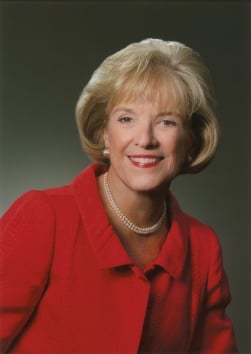
Phenomenal Woman of Mercy
Adele Hall
Adele Hall was a beloved civic leader and lifelong champion for children whose warmth, steady leadership and extraordinary generosity helped shape Children’s Mercy for more than five decades. Today, our main hospital campus proudly bears her name — Children’s Mercy Adele Hall Campus — in recognition of her decades of service, advocacy and heartfelt commitment to every child who comes through our doors.
Adele devoted herself wholeheartedly to the hospital’s mission — volunteering in patient care areas, guiding major initiatives, and offering compassionate, steady leadership that inspired confidence and trust. She earned lifetime emeritus status on both the Central Governing Board and the Board of Trustees; co‑founded the Children’s Mercy Golf Classic with Tom Watson in 1980, a beloved event that ran for 25 years and raised millions to advance pediatric care; and, together with her husband Don, helped bring beauty and comfort to the hospital’s front doors — commissioning the Spirit of the Heart mobile in 2003 and being honored the following year with two Love Bird sculptures overlooking the rotunda in celebration of their 50th wedding anniversary and their decades‑long love for Children’s Mercy.
The Adele Hall Campus, named in her honor in 2013, celebrates not only her lifetime of service but also the extraordinary impact of the Hall family. Adele’s legacy is inseparable from that of her husband, Donald J. Hall, her mother-in-law, Elizabeth Ann Hall and her father‑in‑law, Joyce C. Hall, the founder of Hallmark Cards and one of Children’s Mercy’s most influential early benefactors. The Hall family’s visionary philanthropy helped drive major expansions, endow key leadership roles, elevate research and ensure that Children’s Mercy could grow into a leading pediatric health system for the region and beyond.
Today, the campus that carries her name stands as a reflection of who she was: compassionate, steady, joyful and deeply committed to children. Her legacy lives on in every child who finds comfort here, every family who discovers hope, and every breakthrough that moves pediatric medicine forward with heart.
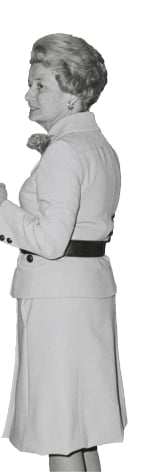
Phenomenal Woman of Mercy
Helen Sutherland
Helen Sutherland was a devoted civic leader whose generosity and unwavering commitment to children helped strengthen the growth of Children’s Mercy during a period of tremendous expansion. She and her husband, Herman Sutherland, were longtime supporters of the hospital’s mission, offering leadership, advocacy and philanthropy that reflected a shared belief: every child deserves care rooted in compassion, expertise and hope. Her kindness and service helped ensure that children and families across Kansas City had access to the highest level of pediatric care.
The legacy of that commitment is honored through the Herman and Helen Sutherland Tower, which opened in 1996 as part of a major modernization of Children’s Mercy. At its debut, the tower expanded the hospital’s ability to care for critically ill infants and children, housing the Pediatric Intensive Care Unit and the Neonatal Intensive Care Nursery, along with private patient rooms that offered families more comfort and dignity during some of their hardest moments. These new spaces allowed Children’s Mercy to meet rising demand while continuing to advance family‑centered care.
Helen’s husband, Herman Sutherland, was a respected Kansas City business and civic leader whose service extended far beyond his professional success. As an executive in the lumber industry and an influential member of the Children’s Mercy Board of Trustees, he played a meaningful role in guiding the hospital through critical decisions in the mid‑20th century — including governance modernization and major facility expansion.
Today, the Herman and Helen Sutherland Tower continues to stand as a testament to the couple’s enduring commitment to brighter futures for children — supporting the lifesaving work of teams who combine expert care with unwavering compassion.
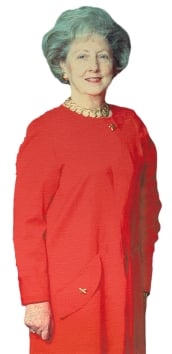
Phenomenal Woman of Mercy
Betty Henson
Betty Henson was a respected civic and philanthropic leader whose service and generosity strengthened many of Kansas City’s most beloved institutions, including Children’s Mercy. As a member of the hospital’s Board of Directors, she championed our mission with compassion and conviction, using her voice, leadership and philanthropy to help create brighter futures for children and families across the region.
Her legacy lives on through the Paul and Betty Henson Patient Tower, an integral part of the Children’s Mercy Adele Hall Campus. The tower stands as a daily reminder of her belief that every child deserves world class care supported by innovation, discovery and hope.
Her husband, Paul Henson, was a prominent Kansas City business leader who guided the telecommunications company that became Sprint. His professional success, paired with the Hensons’ shared commitment to community progress, positioned the couple to make a transformative impact on Children’s Mercy at a pivotal moment in our history.
The Paul and Betty Henson Tower opened in 1999 as part of the hospital’s Centennial Campaign expansion. From the moment it debuted, the tower became a cornerstone for pediatric research — housing the largest pediatric clinical pharmacology laboratory in North America at the time, along with a dedicated Clinical Research Unit designed to ensure that children participating in research could do so safely, comfortably and with family at the center. This marked a meaningful step forward in integrating research and care, bringing discoveries from the laboratory directly to the bedside.
More than two decades later, the tower remains a vibrant symbol of the Hensons’ vision — an investment in knowledge, progress and the health of future generations. Their legacy continues to support the work that defines Children’s Mercy today: expert care delivered with heart, relentless curiosity, and a commitment to every child we serve.
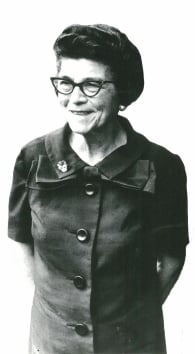
Phenomenal Woman of Mercy
Elizabeth Ann Hall
Elizabeth Ann Hall was a cherished philanthropist whose lifelong dedication to children, education and community service helped shape a legacy of generosity that continues to define Children’s Mercy. As the matriarch of the Hall family, she played a central role in a family whose support has fueled more growth, innovation and possibility at Children’s Mercy than perhaps any other.
Her legacy is honored through the Elizabeth Ann Hall Tower, which opened in 2012 and marked a significant expansion of Children’s Mercy’s capacity to deliver emergency care, surgical services and specialized support for newborns and medically fragile infants. With modernized space, expanded family amenities and improved clinical flow, the tower strengthened the hospital’s ability to meet the needs of children and families who rely on us during some of their most vulnerable moments.
Though the tower is named solely for Elizabeth Ann, her story is deeply intertwined with that of her husband, Joyce C. Hall, founder of Hallmark Cards and patriarch of the Hall family. Joyce Hall’s visionary leadership, generosity and deep personal commitment to Children’s Mercy transformed the hospital across multiple decades — fueling major expansions, endowing the first academic chair, and rallying influential community partners to support the hospital’s evolution into a world class pediatric center.
Together, Elizabeth Ann Hall’s compassion, the Hall family and the Hall Family Foundation’s far reaching commitment continue to light our path forward. The Elizabeth Ann Hall Tower stands today as a symbol of that enduring love — a place where children find healing, families find hope and the future grows brighter every day.
- About Us
- Advisory Boards
- Audit and Compliance
- Awards
- Center for Pediatric Innovation
- Center for Wellbeing
- Fast Facts
- Government Relations
- Leadership
- Legal and Privacy
- Lean System
- National Rankings
- Office of Patient Experience
- Office of Technology Transfer and Commercialization
- Our History
- Patient Progression Hub
- Quality and Safety
- Remote Health Solutions
- Respect for ALL Guidelines
- Small Local Business Supplier Program
- Use of Artificial Intelligence and Other Advanced Technologies