
Anterior Cruciate Ligament (ACL) Surgery Guide
Surgical Approaches
ACL surgery includes both repair and reconstruction. Some tear patterns can be repaired. Others may require a reconstruction of the ligament with a graft to create a new ACL.
Typically, when a reconstruction is needed to stabilize your knee:
- Your own tissue (autograft) or donor tissue (allograft) is used to serve as a substitute ligament.
- This helps you return to normal activities and sports. The doctors will discuss the details of your specific surgery.
All surgeries have risk. This includes:
- Infection
- Stiffness
- Numbness
- Bleeding
- Neurovascular injury
- Deep vein thrombosis (DVT)
- Pulmonary embolism (PE).
Risks after ACL surgery include:
- Repeat ACL tear.
- Tear of your other ACL.
- Meniscus injury.
Surgery is done under general anesthesia.
- Let your surgeon know If you have a family history of problems with anesthesia.
- An anesthesiologist will talk with you on the day of surgery about the plan for your anesthesia during surgery.
The anesthesiologist may offer a nerve block to reduce pain during and after surgery. The nerve block:
- Is given after you are asleep and guided by ultrasound.
- Can lessen the need for narcotic pain medicine.
- May make the front of your thigh and knee numb for a while.
- Can cause muscle weakness for a short time.
You need to take care not to fall.
You may begin to feel a “pins and needles” sensation or have some discomfort when the nerve block starts to wear off.
- Start taking prescribed pain medicine for it to be before the nerve block is completely gone.
- You may take a dose of pain medicine before you go to bed If your block has not worn off.
We recommend patients complete at least 3 to 4 weeks of physical therapy before surgery. This improves strength and range of motion.
Before Surgery:
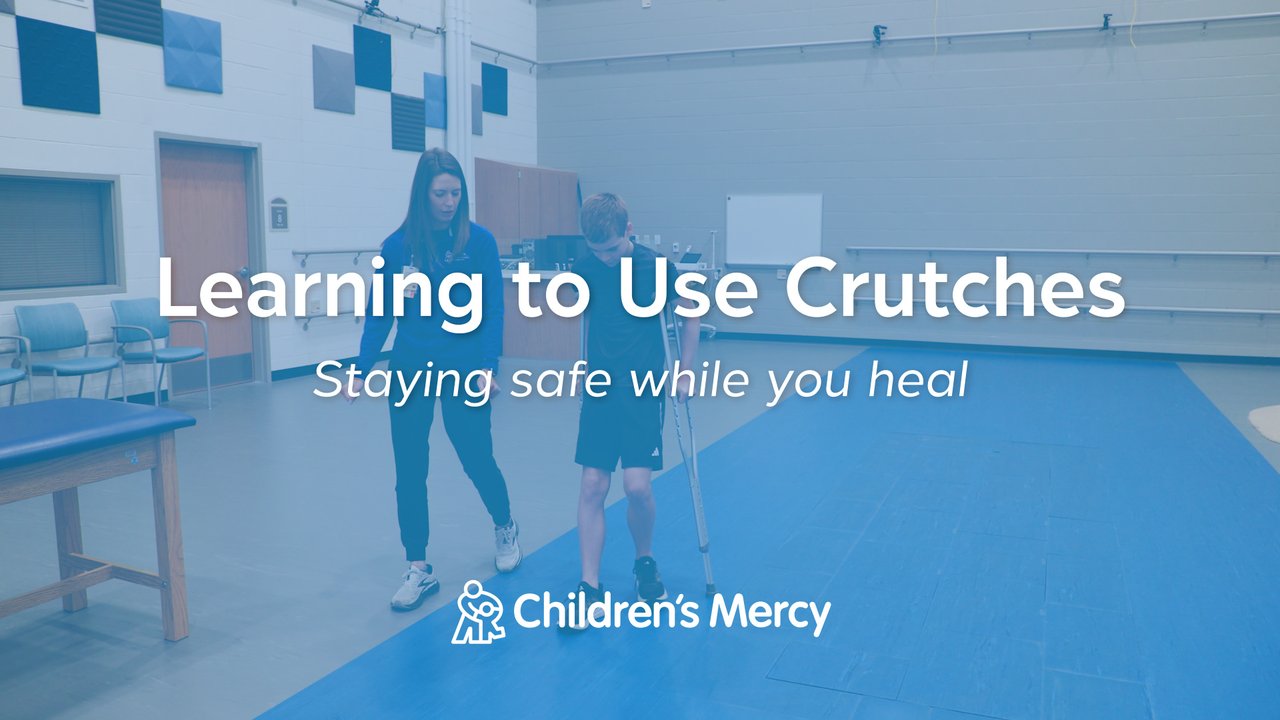
- Complete crutch training.
- You may have an appointment with your doctor to:
- Complete a preoperative history and physical exam.
- Review any testing and physical therapy results.
- Talk about the plan for surgery.
Children’s Mercy Adele Hall Campus
2401 Gillham Road
Kansas City, MO 64108
(816) 234-3534
Children’s Mercy Kansas Same Day Surgery
5808 W 110th Street
Overland Park, KS 66211
(913) 696-8107
What to Expect
A nurse will call to ask about:
- medical conditions
- medicines
- prior surgeries
- problems with anesthesia
- allergies
Extra skin care may be recommended 2-3 times the week before your surgery if you have a history of eczema or acne. This decreases the number of bacteria on your skin and helps lessen the risk of surgical site infections. Skin cleansing options may include:
- Chlorhexidine® skin wipes
- Hibiclens® antiseptic skin cleanser
- Bleach baths (Use 1/8 cup bleach for a half full tub water)
- Same day surgery will call to give you:
- surgery arrival time.
- eating and drinking instructions.
- Do not shave the extremity you are having surgery on.
- Shower the night before or the morning of surgery.
- Do not use any lotions, oils, or powders after the bath or
- Remove contacts, artificial eyelashes, and piercings before surgery.
- Bring glasses or a case for contacts.
- Please bring your photo ID for check-in.
- Wear loose-fitting clothing to go home.
- At least one parent or legal guardian need to be present on the day of surgery.
- No food or drink allowed in the same day surgery area.
- Female patient 10 years or older will need to submit a urine sample the day of surgery for a pregnancy test.
- Bring crutches and hinged knee brace provided (if applicable).
- Be sure you know how to use them prior to surgery day. Contact us (816) 234-3134 or (816) 234-3878 if you need crutches or crutch training.
- Your surgeon will provide discharge instructions before you leave the hospital.
- Your first postoperative follow-up visit will be scheduled for 1 to 2 weeks after surgery.
Swelling
- Keep your knee and foot elevated above your heart while lying down for the first 2 days after surgery. This helps reduce swelling.
- Use your cold therapy pack 3 to 4 times a day while awake.
- Do this for the first 48 hours after surgery.
- You may leave the pack on for as long as you like.
Dressings/ Bandages
- Please leave the dressing and ace bandage on your knee until 3 days after surgery.
- Keep the incision sites clean and dry after you remove the dressings.
- Do not apply any ointments to the incision unless directed. This includes antibiotic ointment.
- If you have Steri-Strips (thin white tape) covering your incisions:
- Leave them in place.
- They will naturally fall off on their own in 1 to 2 weeks.
Weight Bearing
- Follow discharge instructions!
- Do not put weight on your leg until instructed by your surgeon.
Knee Brace
- Always keep the Only take it off for bathing or knee exercises.
- Keep the brace locked in the position set by your surgeon.
- Do not change settings on brace.
- Do not prop anything under the knee.
Bathing
- You may shower with help after 3 days.
- See below for more information.
- Sit in a chair with your leg extended straight while you shower.
- You may allow warm, soapy water to run over the incisions.
- Do not scrub the incisions.
Medications
- Use Ibuprofen (Motrin®, Advil®) and acetaminophen (Tylenol®) for post-operative pain.
- You have a prescription for narcotic pain medicine for severe pain.
- You should only take narcotics should the first few days after surgery and only as needed.
- Take narcotics as directed.
- Do not take more often than every 4 hours.
- Take medications with food to prevent an upset stomach.
- Constipation can occur after surgery and with narcotic use.
- Drink plenty of fluids and eat high-fiber foods (i.e.: bananas, bran, apple juice).
- Use over-the-counter medications as needed. (MiraLAX® or Colace®)
Physical Therapy and Home Exercises
Schedule your first physical therapy appointment within 1 week after surgery.
Start the following exercises 1 day after surgery to begin activating the muscles in your leg.
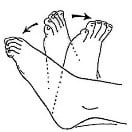
Keep your leg straight. Pull your toes and foot back as far as you can just using your muscle strength. Then point your toes down as far as you can.
- Do 20 reps.
- 3-5 times each day.
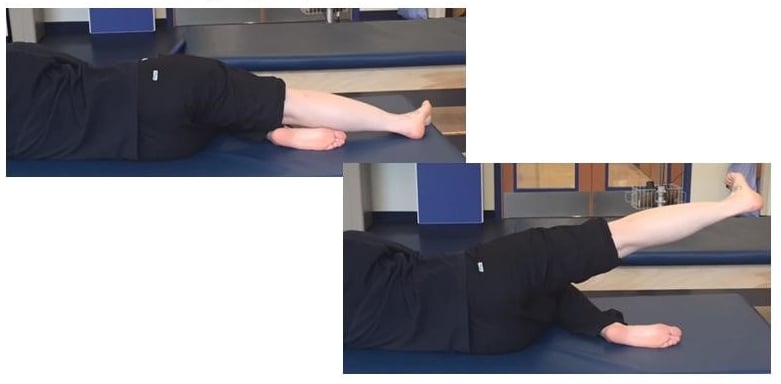
Lie on your side with the injured leg on top. Keep your knee straight and lift your leg toward the ceiling.
- Hold for 5 seconds, then lower.
- Do 10 reps.
- 1 to 2 times each day.
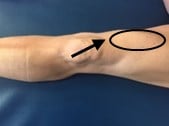
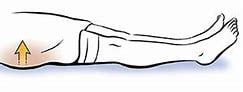
Sit with your leg straight. Tighten your thigh muscle by pressing the back of your knee down toward the floor. You should see your kneecap move up.
- Hold for 5 seconds.
- Do 20 reps.
- 3 times each day
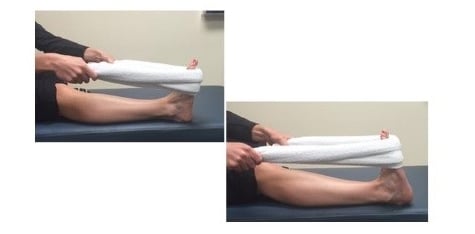
Sit with your leg straight and loop a town around the ball of your foot. Keeping your knee straight and heel down, pull your toes back until you feel a stretch in your calf.
- Hold for 5 to 10 seconds.
- Do 3 reps.
- 3 times a day and increase as directed by therapist.
Lay on your back and squeeze your bottom to tighten your buttock muscles.
- Hold 5 seconds and then relax.
- Do 20 reps.
- 1 to 2 times each day.
ACL Frequently Ask Questions
How To Contact Us
Contact your surgeon via the patient portal. This is a great way to communicate!
- You can send photos, request forms, and address any questions.
Request access at your next visit if you do not have a portal yet.
- The access representative will verify your identity. Then send you an email link to create your account login and password.
Before 3:30 p.m. on weekdays:
- If you are seen by Kevin Latz or Mohammad Abdelaal call: (816) 234-3134
- If you are seen by Ryan Koehler call: (816) 234-3878
If after 3:30 p.m. on weekdays or on weekends
- Ask for the orthopedic resident on-call - (816) 234-3000.
Call the doctor if you have:
- Fever greater than 101.5°F
- Continuous draining or bleeding on dressing
- Excessive nausea or vomiting with use of pain medicine.
- Worsening pain in the leg where surgery was done that get worse with proper use of pain medicine.
- Pain or increased swelling, warmth or redness in thigh or calf.
- Shortness of breath
- chest pain
- sudden onset coughing