Severe Cystic Bronchopulmonary Dysplasia: Joshlynn’s Story
Meet Joshlynn
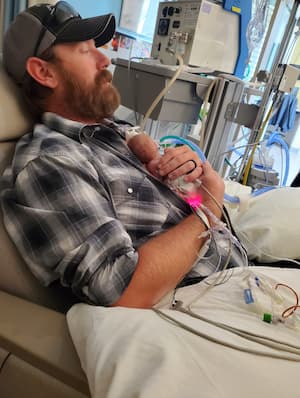
For Brittany, the first flight her daughter ever took wasn't a family vacation or a trip to visit relatives.
It was a medical transport.
Joshlynn was fighting for her life from the moment she was born, arriving in early fall of 2024 at just 26 weeks’ gestation and weighing only 1 pound, 8 ounces. At just 1 month old, the Children's Mercy Critical Care Transport team took Joshlynn by aircraft from her hospital in Columbia, Mo., to Kansas City for more specialized care. Her tiny lungs were struggling, and a procedure to repair a hole in her heart would have to wait until physicians could stabilize her breathing. Her parents had no way of knowing then just how long the road ahead would be.
What they did know was this: their daughter needed help, and Children's Mercy was ready.
For the family from Carrollton, Mo., Joshlynn's journey would become a story of perseverance, innovation and a care team willing to pursue every possible path forward. It would involve one of the nation's leading programs for severe bronchopulmonary dysplasia (BPD), a Platinum-level ECMO program and a specialized home ventilator team that continues to care for Joshlynn today. Most importantly, it would reveal the determination of a little girl who never stopped fighting.
When every day brought a new challenge
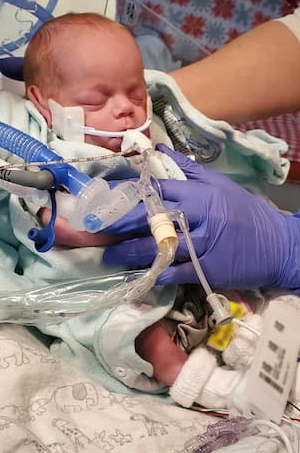
The first weeks of Joshlynn's life were marked by numerous complications. At just a few days old, she underwent emergency surgery for a stomach perforation. Soon after, a severe infection led to pneumonia, causing significant damage to her developing lungs.
Because she was born so early, Joshlynn developed severe cystic bronchopulmonary dysplasia, often called BPD, a chronic lung disease that can affect babies born extremely prematurely. In babies with BPD, lungs continue developing outside the womb while facing infections, inflammation and the need for breathing support.
Recognizing the complexity of her condition, Children's Mercy's specialized BPD team took over her care.
"Our BPD program doesn't treat a child with BPD as just a bigger preemie, but really focuses on the disease condition and their unique needs," said Karishma Rao, MD, Medical Director, Chronic Lung Diseases Inpatient Services.
The team not only focuses on the unique challenges of BPD, but also each child’s growth, development and long-term outcomes.
That philosophy has helped shape our specialized approach to severe lung disease for years. As one of the founding members of the international BPD Collaborative, Children's Mercy works alongside leading children's hospitals across the country and around the world to improve care for children with severe BPD. The goal isn't simply helping babies survive. It's helping them grow, develop and experience childhood whenever possible.
For Joshlynn and her family, that expertise was vital. Then came one of the most critical moments in Joshlynn's journey.
A different kind of ECMO story
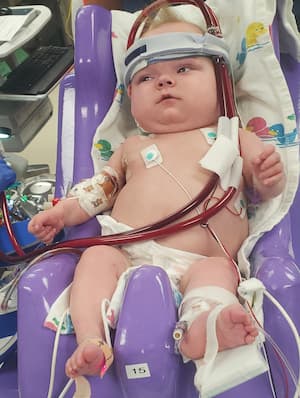
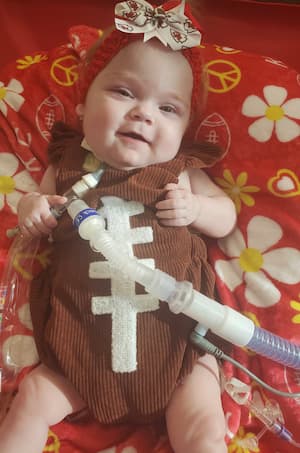
As months passed, Joshlynn's lungs became increasingly difficult to manage. Large air-filled cysts, called pneumatoceles, formed within her lungs, taking up space her healthy lung tissue desperately needed and making it harder for her to breathe. The cysts grew so large, they began affecting her heart, leaving her care team searching for a solution.
That's when Children's Mercy's multidisciplinary team considered extracorporeal membrane oxygenation, better known as ECMO. ECMO is a highly specialized form of life support that temporarily takes over the work of the lungs, giving them time to rest and heal.
"When [Winston Manimtim, MD, Medical Director of Neonatal Outpatient Services and Medical Director of the Infant Tracheostomy & Home Ventilator Program] came to me and asked whether ECMO was an option, I said, 'Gosh, I don't see why not,'" said John Daniel, MD, Associate Medical Director of the NICU and Director of the Neonatal Extracorporeal Life Support Program. "We needed those large cysts removed, and performing that operation in the condition she was in was not going to work. ECMO gave us a pathway to do something that otherwise wouldn't have been possible."
Not every hospital would have considered ECMO for a child with lung disease as severe as Joshlynn's.
"One of the things that I really like about our center and our program here is we will try just about anything. If there is a chance that it will work, most of the time everyone gets together and is like, 'Okay, how can we make this work?'" Dr. Daniel said.
That collaborative approach is one reason the Children's Mercy ECMO program has earned Platinum Level Center of Excellence designation from the Extracorporeal Life Support Organization, the highest recognition awarded to ECMO programs worldwide. The distinction recognizes excellence in patient care, education, quality improvement and program development. Children's Mercy has maintained that highest-level designation since the organization introduced tiered recognition.
For many children, ECMO means long days of rest and recovery. At Children's Mercy, it can also mean something more.
When clinically appropriate, infants are supported with less sedation while on ECMO. The ECMO team works closely with Child Life specialists, therapists and other clinicians to help children remain engaged with the world around them whenever possible. Even while receiving ECMO support, patients may participate in activities that encourage continued development and recovery. For babies like Joshlynn, that can include sitting up, interacting with caregivers, playing and working on feeding skills.
While ECMO was supporting Joshlynn's breathing, surgeons were able to move forward with the procedure she desperately needed.
"Joshlynn's care really reflects the teamwork and trust that goes into caring for a critically ill newborn," said Rebecca Rentea, MD, MS, MBA, Section Chief, Colorectal and Pelvic Reconstructive Surgery. "These are incredibly complex decisions, and having surgeons, neonatologists and the rest of the care team working together allows us to determine the best approach for each individual child."
Supported by ECMO, surgeons successfully removed the large cysts from Joshlynn's lungs.
For Brittany, the difference was almost immediate, "This girl looked so much better after that surgery than she did going into it.”
More than survival
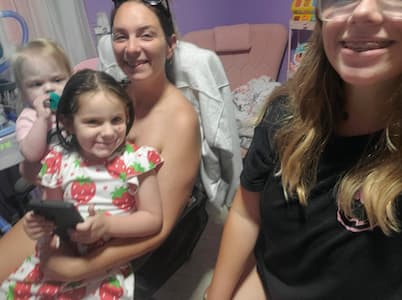
Even after coming off ECMO, Joshlynn's journey remained complex. She faced recurrent episodes of necrotizing enterocolitis (NEC), a serious intestinal disease that primarily affects premature infants. Progress felt slow at times, and the finish line moved more than once.
For Brittany, there were moments when the future felt uncertain. More than once, she was told her daughter might not survive. More than once, she prepared herself for the possibility of saying goodbye.
Yet Joshlynn continued to fight.
"That girl writes her own story," Dr. Rao said. "Some of the things we did, she responded to incredibly. Once she got off ECMO and received her tracheostomy, she just took off."
As her health improved, Joshlynn's personality began filling her hospital room.
Physicians remember a baby who became far too active for a traditional NICU setup. Therapists worked with her on sitting, playing, moving and exploring. Nurses watched her become one of the most recognizable faces in the unit.
"There wasn't anybody who walked by her bedside who didn't come back smiling," Dr. Rao said. "She was so full of joy."
Eventually, Joshlynn became so active that the care team had to adapt her environment. The little girl who once fought for every breath was suddenly crawling, standing and trying to explore everything around her. These milestones that once felt like a distant hope for her family were now happening before their eyes.
Bringing childhood home
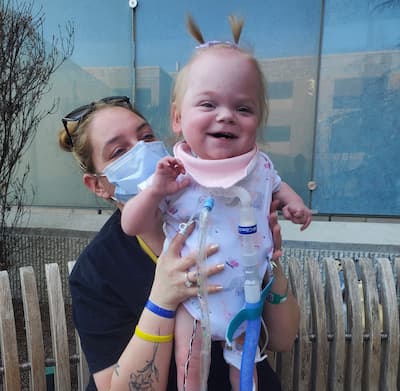
After 624 days in the hospital, Joshlynn finally went home in May of 2026.
The journey did not end there.
Because Joshlynn still depends on a tracheostomy and ventilator support, she continues receiving care through the Children's Mercy Infant Tracheostomy and Home Ventilator Program, one of the nation's largest programs of its kind. The same physicians, nurse practitioners and clinicians who cared for her in the hospital remain involved after discharge, helping guide her family's transition home and supporting her continued progress.
For Addie Begley, RN, MSN, NNP-BC, who now helps care for Joshlynn through the Home Vent program, one of the most rewarding parts of the journey has been watching her continued growth.
"She is a remarkable patient with a fantastic mom who has worked her tail off to get her where she is," Addie said.
Addie remembers a little girl who went home fully dependent on a ventilator and facing significant developmental delays. Today, at the age of 2, Joshlynn is taking independent steps, becoming more active every day and showing signs that she may be ready for short periods of time off ventilator support.
"I try to listen to our patients," Addie said. "She's telling us that she's ready to try a little time off of this. We're going to see how she does."
At home, Joshlynn is busy being exactly who everyone at Children's Mercy knows her to be: determined, energetic and just a little mischievous.
Her favorite show is Mickey Mouse Clubhouse. She loves attention. And if she thinks someone is focusing on something other than her, she has developed a habit of disconnecting her ventilator tubing just long enough to remind everyone she is there.
For families facing difficult diagnoses or long hospital stays, Brittany hopes Joshlynn's story offers encouragement.
"Don't give up," she said. "These babies are so resilient. They make the call. Not the doctors. Not us parents. It's them."
Today, Joshlynn is still writing her story. She continues to make progress, bring smiles to the people around her and remind everyone who knows her that sometimes the smallest fighters make the biggest impact.