Ayden's Story
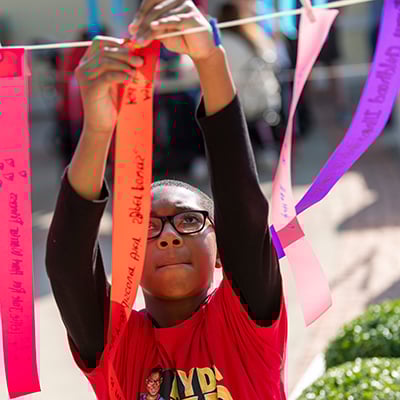
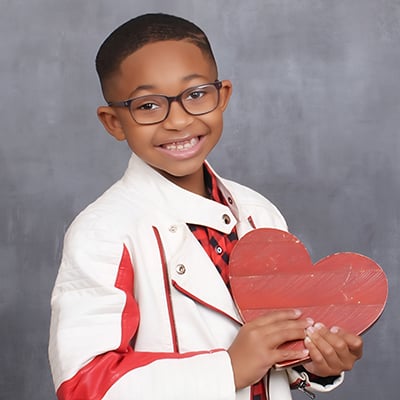
11-year-old Ayden believes a world where everybody is the same would be boring. “Everyone is different, and our differences are what make us unique,” said Ayden. “Our differences are what make us the heroes we are.”
Ayden knows: He was born with a rare heart difference called tetralogy of Fallot (ToF). He has an even rarer subtype called ToF with absent pulmonary valve syndrome. As a newborn and toddler, he had 2 open-heart surgeries at Children’s Mercy to help his heart function well. He’s now a very active kid who visits the Ward Family Heart Center for follow-up appointments once a year.
“I wish kids understood that we may have different hearts or abilities, but we're still kids who love to have fun, play sports and hang out with our friends,” said Ayden. “Our differences bring fun to the world!”
“He’s just been a ball of joy,” said Shannon, Ayden’s mom. “He’s so resilient. To this day, he has such a positive attitude. Nothing phases him.”
A complex surgery and fast recovery
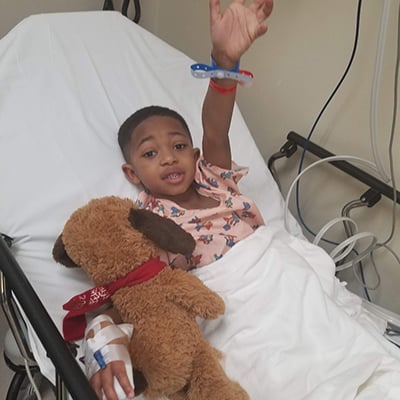
Shannon had “the best pregnancy ever,” with no signs anything was wrong until Ayden was born struggling. He was transported to Children’s Mercy for diagnosis and treatment right away. The team there found Ayden’s most pressing ToF challenge: the valve between Ayden’s heart and lungs didn’t develop correctly and was leaking.
“That leakiness exposes the developing pulmonary arteries to a lot of extra blood flow and that causes the blood vessels in the lungs to get really big,” explained Amanda McIntosh, MD, a physician in the Ward Family Heart Center, and Ayden’s current cardiologist. “The pulmonary arteries get so big that it can compromise the airways.”
He needed open-heart surgery, but he was stable despite his "massively dilated” pulmonary arteries. His care team wanted him to be a little bigger for his operation. After spending a couple weeks in our NICU, Ayden was able to go home and get growing.
“He did so well after he was born that he was able to leave the hospital, which is very remarkable,” said Dr. McIntosh.
Shannon focused on keeping him safe from infections, which were extra dangerous to his fragile heart and lungs. Ayden had his first heart surgery when he was 4 months old.
Children’s Mercy surgeons reduced the size of his pulmonary arteries, put in an artificial pulmonary valve and closed his ventricular septal defect (a hole between the lower heart chambers). Ayden shocked everyone again by recovering so quickly that he was able to go home in under a week.
“It was an awesome outcome,” said Dr. McIntosh.
A replacement valve and waiting-room calling
Artificial pulmonary valves are sized to fit at the time of surgery. “We tell families they can expect to come back for the valve to be replaced because they outgrow it,” said Dr. McIntosh.
In Ayden’s case, other complications prompted that replacement surgery: When Ayden was 3 years old, he began turning blue in his sleep and waking up gasping for air. Shannon took him to the ER several times, but his symptoms disappeared when he was awake.
She took him back to Children’s Mercy where she got answers with a sleep study: Ayden had severe sleep apnea, which was putting pressure on his heart. It was failing. Ayden needed heart surgery quickly to replace his artificial valve.
During Ayden’s surgery, Shannon remembers looking around the waiting room at other worried families: “I saw so many families — mothers — crying, and, you know, I understand.” Shannon began praying with the other women in the room, one by one, as she waited to hear about Ayden. A chaplain saw her encouraging others and invited her to join the Parents Offering Parent Support (POPS) program to help mentor other cardiac families.
“I think people saw a strength and calmness I didn’t realize I was even displaying,” said Shannon. “That’s how I got to the POPS program.” She’s mentored other parents off and on, when patients with similar challenges as Ayden have arrived at Children’s Mercy.
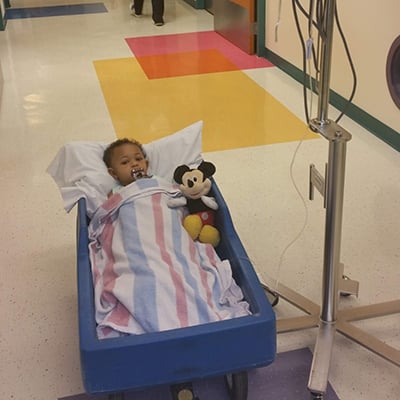
Ayden’s surgery went well, and again, he recovered much faster than anyone could have predicted. Within days, he was refusing wagon rides — preferring to walk — and dragging his medical equipment behind him into craft time.
“It was such a miracle with this kid,” said Shannon.
Ongoing and holistic care
Ayden, now 11, sees Dr. McIntosh once a year to monitor his progress, especially through growth spurts. Most kids with artificial pulmonary valves will need 1 to 2 more replacements as they grow into adulthood.
“Our hope is that we can put those valves in without surgery in the cardiac catheterization lab,” explained Dr. McIntosh. “And the technology is always changing, adapting and getting better.”
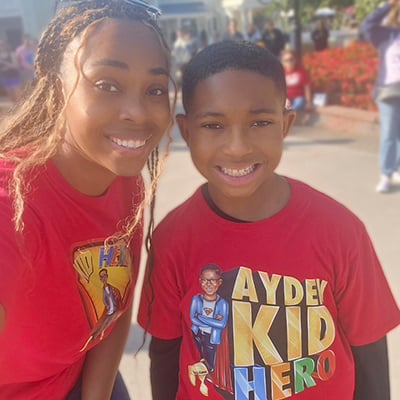
Ayden is old enough now to do stress tests to measure his exercise capacity and wear a heart rhythm monitor to track electrical signals during his annual check-up.
“He has a very active social and sports life,” said Dr. McIntosh. “That’s what I like to see because he knows his body, and he’ll know if things change. If he’s doing three sports a week and notices he can’t swim as far, I’m going to listen to that.”
Dr. McIntosh said the Heart Center’s robust, multidisciplinary team looks after the whole patient — and their family, too. “We think about not just the kid’s heart, but how they are doing at school, in sports, whether they are thriving,” said Dr. McIntosh. The Heart Center Wellbeing Program offers specialized psychosocial and neurodevelopmental support as well, so families get the resources they need, right when they need them.
Sharing their story
As Ayden recovered, and his care tapered to yearly appointments, Shannon began thinking about how she could help other people: “I believe there was a purpose in Ayden’s journey — to bring encouragement, strength and peace to other families — and that he is proof that miracles still happen.” She decided to tell their story through two books, one for adults and one for kids, to support other families.
A Fight by Faith: A mother and son’s journey through CHD was written to help bring healing to families with young children who are facing cardiac illnesses. This book offers tools, support, and encouragement to help them find the strength that lies within them.
“It’s good to have an example of someone who’s been through it to make families feel like ‘it’s not just us’,” said Shannon. The children's book The Heart of a Kid Hero helps kids discover their inner powers — and bring them out in others.
“You all have these inner powers,” said Shannon. “Joy can be a superpower, helping others is a superpower. I wrote it so any kid can feel encouraged.”
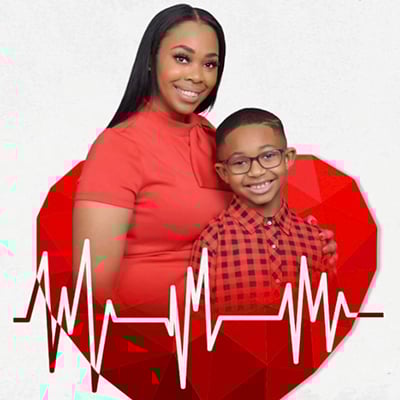
Shannon has brought the books to the Kreamer Resource Center for Families and shared them in other venues as well. Most recently, she and Ayden hosted an event and brought books to a martial arts school in Miami. Several instructors at the school are cancer survivors, and they connected with the message of the book.
“I love drawing and telling stories through my drawings, which brings my characters to life,” said Ayden. “I'll be writing my own books, as well as comic books, soon. Stay tuned!”
“I’m very thankful to have Ayden as a patient because he is able to share what his life is like now with me,” said Dr. McIntosh. “I use those experiences when I’m counseling families getting this scary diagnosis and not knowing what the future holds. In this way, his story multiplies down the road in a way you can’t quantify.”