
Get updates
Have a parenting hack to share? Or a topic you'd like to see?
Building emotional intelligence in children

Contributing Authors
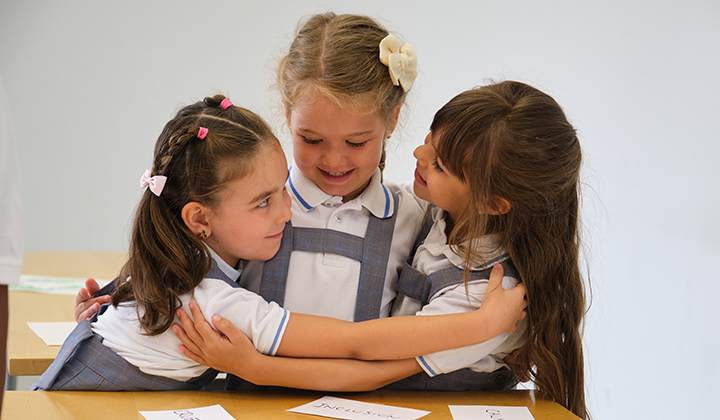
Big feelings are part of growing up. Tears, meltdowns, frustration and joy all show up early and often. Emotional intelligence helps kids understand those feelings and figure out what to do with them.
Emotional intelligence is a child’s ability to notice, name and manage their own emotions while also understanding how others feel. These skills do not show up overnight. Kids learn them little by little through everyday moments with parents, caregivers, teachers and friends.
The good news? You do not need to be perfect to help your child build emotional intelligence skills. You just need to be present and willing to practice together. Keep reading to learn the importance of emotional intelligence, how to foster it in your child and more.
The importance of emotional intelligence
Kids with stronger emotional skills tend to have an easier time with friendships, cooperation and frustration. They are also more likely to do well in school and have fewer behavior challenges.
Emotional intelligence also supports long-term mental health. Kids who learn how to understand and manage emotions early are better prepared to handle stress, challenges and relationships as they grow.
This is not about stopping emotions or keeping kids calm all the time. It is about helping them notice what they feel and learn how to respond in helpful ways.
When emotional intelligence starts
Emotional development and social emotional learning begins earlier than many parents realize. Even babies start learning about emotions through their caregivers. When a parent responds to a baby’s cries with comfort, the baby begins to feel safe and understood. This builds the foundation for emotional growth.
As kids grow, emotional skills become more complex.
- Toddlers begin to recognize basic feelings like happy, sad and mad
- Preschoolers start learning how to calm themselves with support
- School age kids work on impulse control, frustration and empathy
Parents support this growth by responding warmly, naming emotions out loud and helping kids connect feelings to situations.
Everyday hacks to help kids manage big feelings
Emotional learning happens in everyday moments, not just during big talks. Small habits can make a big difference. Here are a few easy ways to build emotional intelligence skills.
Name the feeling
Help your child put words to what they feel. Saying “It looks like you feel frustrated” helps kids connect emotions to language.
Keep language simple
Use words your child understands. Younger kids may say “mad” or “sad,” while older kids can learn words like “disappointed” or “nervous.”
Validate first, then guide
Start by acknowledging the feeling before correcting behavior. It is OK to feel mad. It is not OK to throw toys.
Teach coping tools
Practice calming skills when your child is calm. Deep breathing, taking a break or squeezing a stress ball can help when emotions run high.
Stay nearby
Sometimes kids just need you close while they work through a feeling. Being present helps them feel safe.
Teaching empathy without a lecture
Empathy grows through experience, not long explanations. Social emotional learning happens by watching, practicing and being guided in real moments.
You can support empathy by:
- Pointing out how others might feel
- Asking simple questions like “How do you think they felt?”
- Modeling empathy in your own actions toward others
- Keeping comments short and clear
- Helping kids see how their actions affect others
The goal is not perfection. It is helping kids begin to notice and care about how others feel.
A common mistake parents make
Many parents try to fix emotions too quickly. Saying “you're fine” or distracting a child right away can send the message that uncomfortable feelings are bad should be avoided, as opposed to signals that can be understood and acted upon in a helpful way.
A more helpful approach is to pause, acknowledge the emotion and help your child name it. When kids feel heard and understood, they are better able to stay with their feelings and choose how to respond in healthy ways.
Modeling emotional intelligence as a parent
Kids often learn more from what parents do than what they say. Modeling emotional intelligence does not mean staying calm all the time. It means being real and intentional.
You can model emotional skills by:
- Naming your own emotions (e.g., “I’m upset I stubbed my toe.”)
- Showing healthy coping strategies (e.g., “I’m going to take a few deep breaths to calm down.”)
- Repairing after mistakes (e.g., “I’m sorry I raised my voice earlier”)
These moments teach kids that emotions are normal and manageable, even on hard days.
The role of play in emotional development
Play is one of the most powerful ways kids build emotional skills. Through play, kids practice expressing feelings, problem solving, and understanding others.
- Younger kids often use pretend play to explore emotions
- School-age kids can learn through games with rules
- Older kids tend to build skills through sports, group activities and hobbies
Play gives kids a low-pressure way to practice handling emotions and relationships.
Is it ever too late?
It is never too late to support your child’s emotional growth. Even teens continue learning from how parents listen, respond and show empathy.
If your child is older, focus on staying open, listening more than lecturing and validating emotions even when you do not agree with behavior. Small changes can have a big impact over time.
You have not missed the boat. Every day brings new chances to help your child build emotional skills that last a lifetime.
Contributing Authors
Get updates
Have a parenting hack to share? Or a topic you'd like to see?
Related Posts
- Hitting and biting: what parents need to know
- Debunking myths about COVID-19
- How to promote diversity and inclusion in your child’s life
- What every parent should know about preventing child trafficking
- The No. 1 rule about cleaning out earwax
- Food allergies: are more kids allergic to food or are we just more aware?
- Bedwetting: What causes it and when to be concerned?
- The great cover-up
- All about strep throat
- A parent’s guide to discussing white privilege