
Get updates
Have a parenting hack to share? Or a topic you'd like to see?
Child fever management: What every parent should know

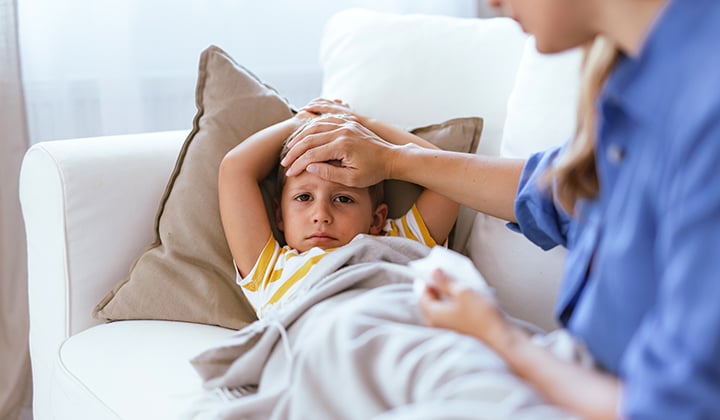
Wondering if that warm forehead means trouble? You’re not alone. Fever questions are one of the top reasons parents call their pediatric health care provider. The good news? Most fevers are a sign your kid’s immune system is doing exactly what it should. In this guide, we’ll cover what counts as a fever, when to worry and expert tips for child fever management at home—all in a way that’s practical and parent-friendly.
What is considered a fever in children?
A fever in children (and all ages) is 100.4°F (38°C) or higher. The best thermometer for kids depends on their age:
- Babies and toddlers: use a digital rectal thermometer
- Older kids: oral temps are your best bet
Forehead, ear and armpit checks? Convenient but not always spot-on.
Why do kids get fevers?
Fevers are your kid’s immune system saying, “We’ve got this.” Most often, it’s a mild infection like a cold. So, while it feels alarming, it’s usually not a big deal.
When to call the doctor
Reach out if:
- Fever lasts 5 days or more
- Baby under 3 months hits 100.4°F
Or if you see these red flags:
- Not drinking fluids
- Rash
- Non-stop crying
- Severe belly pain
- Stiff neck + headache
- Persistent vomiting
- Trouble breathing
- Seizure
- Extreme lethargy (even after fever meds)
Home hacks for child fever management
- Let the fever do its job—don’t rush to medicate unless your child’s uncomfortable.
- If you do use meds, dose by weight (ask your provider if unsure).
- Try a lukewarm sponge bath (skip the ice bath—brrr!).
- Push fluids and encourage rest.
School or daycare?
If it’s 100.4°F or higher, keep them home. Even if meds bring it down, they’re still contagious. Best practice is to keep them home until they are fever free for 24 hours without the use of fever-reducing medications. And honestly, if they’re feeling crummy, a day of TLC beats a classroom anytime.
Fever myths busted
- Teething? Might raise temp a smidge but not a true fever.
- Warm to the touch does not equal fever. Grab a thermometer to be sure.
- Shivering? Don’t pile on blankets—sweating and shivering are normal body responses.
Bottom line: Fevers aren’t the enemy; they’re a sign your kid’s body is working hard. Keep calm, monitor symptoms and when in doubt, call your pediatric health care provider.