Amplified Pain Syndrome: Kit’s Story
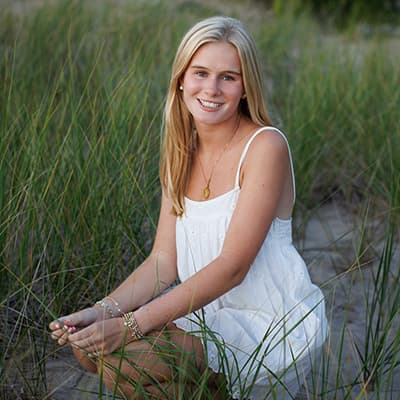
Meet Kit
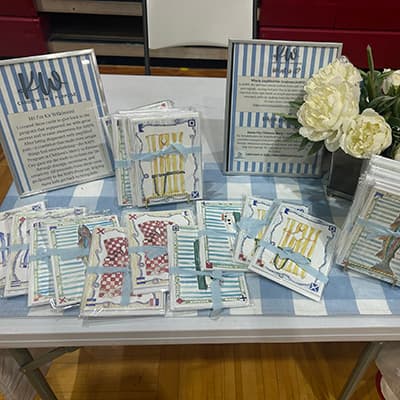
Wander around Leland, Mich., a hidden gem on Lake Michigan’s coast, and you’ll find some distinctive greeting cards in several local shops. Flip the nautical-themed watercolor card packs over, and you’ll see a message from the artist, 18-year-old Kit:
“After being diagnosed with amplified pain — a condition that made even simple things feel overwhelming — the Rehabilitation for Amplified Pain Syndrome (RAPS) Program at Children’s Mercy in Kansas City gave me the tools to reclaim my life through therapy, movement and creativity. All proceeds from these cards go directly to the RAPS Program, helping more kids get back to being kids.”
Kit’s family lives in St. Louis but has been summering in Leland for five generations. After RAPS helped this young sailing teacher get back on the water, Kit wanted to give back. She painted and designed the cards and sold them during their 2025 summer stay. Recently, Kit’s physician, Cara Hoffart, DO, Medical Director of the Pain Clinic, got a thank you letter with a surprise in it — a gift of $16,300 for the program.
“Never in my wildest dreams would I have imagined opening an envelope with the checks that were enclosed,” said Dr. Hoffart. “I’m just so impressed by the amount of effort and time that had to have taken.”
Kit’s family is working with Children’s Mercy to create a long-term investment that benefits RAPS patients and families for years to come.
"The pain never went away”

Now a senior in high school, Kit has chronic recurrent multifocal osteomyelitis (CRMO), an inflammatory bone condition. But as a young teenager, she developed amplified pain syndrome as well. Amplified pain can develop out of the blue or be triggered by another condition. Symptoms include chronic pain that may be accompanied by fatigue, headaches, GI symptoms, dizziness, difficulty concentrating and/or change in mood.
“During my freshman year of high school, the pain never went away,” said Kit. “That summer, I was trying to do all my favorite things, but I couldn’t. I was trying to teach sailing, but I couldn’t even go on the boat.”
Kit kept waiting for things to get better, but they didn't. It even hurt to laugh. “My body was always tensed, always braced,” explained Kit. “I spent Thanksgiving night propped up in a chair because I couldn’t fall asleep, and it hurt too badly to get up.”
Kit’s mom, Libby, researched pain programs and found RAPS, an intensive, multidisciplinary program for patients with amplified pain at Children’s Mercy.
“My mom is my biggest inspiration,” said Kit. “She is so strong. I leaned on her for so much emotional support — but also for the research she did!”
The RAPS Program launched in March 2013 and currently hosts up to six patients at a time for all-day treatment with physical and occupational therapy, talk therapy and self-regulation practice. The Children’s Mercy team includes Dr. Hoffart, nurse practitioners, pain psychologists, a licensed counselor, several physical and occupational therapists, child life experts and a yoga teacher.
"Amplified pain is pain out of proportion to what’s expected or what’s been found on a patient’s imaging or labs,” said Dr. Hoffart, who first met Kit in December 2023. Kit had appropriate treatment for her CRMO, was on the right medications and her imaging was improving. But her pain remained.
Many patients with amplified pain haven’t been taken seriously in the past, which can lead to long delays in diagnosis. Dr. Hoffart explains the science of pain to her patients and tells them their pain is real — and so are its psychological impacts.
“Pain increases stress, and stress increases pain, and then pain takes you out of life,” explained Dr. Hoffart. “Who you are, who you want to be — your identity — has been taken from you.”
"There was nothing she could not do”

It took a little convincing for Kit to decide to spend more than a month on the other side of the state, away from her friends and school. But she wanted to be better. “I don’t think there were any other options,” Kit said. Finding a rental that would let her family bring their dogs, Moose and Coconut, sealed the deal. Kit began RAPS in February 2024.
“It was really rough in the beginning,” said Kit. “I’m not going to lie. But I think pushing through that is what made me who I am today.”
Getting up in the morning to swim in the therapy pool was hard. She used to love swimming; now it hurt to try, and the chlorine irritated her sensitive skin. She found the psychological side of the program even more challenging.
“I’m someone who loves to overthink, and I have to get in touch with my emotions,” said Kit. “Once that clicked, that helped.”
About 5 weeks in, she started to be able to “max out all her tasks,” or perform a certain amount of reps of an exercise — like arm step ups, inchworms or jumping — in a certain amount of time. She was moving with more fluidity and talking about her feelings.
“When she decided to be open to the emotional piece, we really saw her launch forward,” said Dr. Hoffart. “By the time she left RAPS, there was nothing she could not do.”
"This wasn’t just a job to them”
Dr. Hoffart now sees Kit in the Rheumatology clinic, but she no longer needs treatment for pain at Children’s Mercy.
Kit hasn’t had any pain flares during her senior year besides getting a little tight during stress-filled exam seasons. She works out regularly, does talk therapy as needed and uses art and music to self-regulate. She’s applying to colleges right now and is interested in studying art and business.
She credits the RAPS team with helping her return to sailing, her friends and her life.
“The staff at RAPS is one-of-a-kind,” said Kit. “Some of them are really kind, and some of them give you the push you need to just keep going. They all wanted me to succeed so badly. This wasn’t just a job to them. It felt like so much more.”
“She is an amazing human, and she’s going to do great things,” said Dr. Hoffart. “It’s just a testament to how much she’s continued to grow as a person and what she’s taken from this experience.”
Kit’s message for other kids with amplified pain syndrome:
My heart is with you. Sometimes it is so hard for your peers to understand it, because while they're worried about some friendship drama, you can barely get out of bed. You're spending half your life at the doctor's office. But it does get better. It sounds so cliché, but you got this. You're stronger than you think. In the long run, not everyone's going to have the experience and endurance that you have. It's going to suck before it gets better. But if you stick with it, and you put in a little effort, and you're not so hard on yourself, and you embrace the tears ... It will work out, and you will be okay.