
Langerhans cell histiocytosis (LCH): Charlotte’s Story
Meet Charlotte

Charlotte is a "girly girl” who loves being with her big family, swimming, painting pictures and Post Malone — just like her mom and grandma. "She has all the attitude in the world,” said Charlotte’s mom, Emmry, of the spirited kindergartner. That tenacity served her well when she faced a rare diagnosis early in life.
In early 2021, 9-month-old Charlotte seemed to have a routine winter bug. Then she developed a bad rash and woke up so pale “her lips blended in with her skin,” Emmry remembered. “We had already taken her to the doctor once, but my mother’s instinct was that this isn’t a normal day care sickness.”
Emmry took Charlotte to Children’s Mercy Kansas, where they confirmed Charlotte needed support and quickly transferred her to the Adele Hall Campus to be admitted. Within a few days, Charlotte’s rash had gotten significantly worse, and she was struggling overall. Dermatology reached out to J. Allyson Hays, MD, Director, Histiocytosis Program, to ask: Could this be Langerhans cell histiocytosis (LCH)?
LCH is a rare disease where immune cells build up and create tumors and tissue damage. Sometimes LCH causes a skin rash or an isolated bone lesion and resolves on its own. Other times, LCH impacts many parts of the body and can be life threatening.
“There are times when LCH is more aggressive,” explained Dr. Hays. "LCH cells are closely related to myeloid leukemia cells; I call it a form of cancer.” Unfortunately, this was the kind of LCH Charlotte had. She was diagnosed with multisystem LCH. The disease was attacking several vital organs like her liver, spleen, skin and bone marrow.
A long journey to find the right treatment
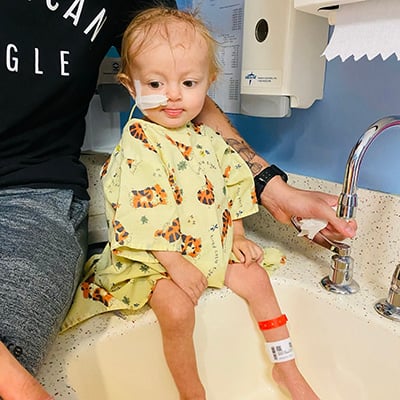
Charlotte began chemotherapy, but it was a challenge to find a regimen that could fight her LCH. “Sometimes we spent up to 3 weeks in the hospital at a time because Charlotte was skin and bones, and they needed to maintain her weight,” said Emmry. “The chemo just wasn’t doing enough.”
“She would get better to the place where she wasn't quite as ill, but she never really bounced back, never really improved,” said Dr. Hays.
Charlotte had countless blood and platelet transfusions has her team tried different forms of chemotherapy. In the summer of 2021, she had to have her spleen removed. They found active LCH in her spleen, which confirmed that her current medicines weren’t getting rid of the LCH. “It was keeping the lid on it, but it wasn’t wiping it out,” said Dr. Hays.
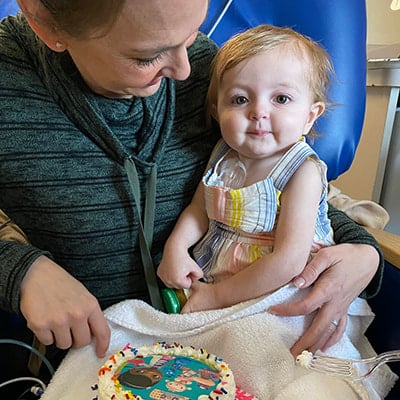
Charlotte’s family and care team did their best to keep her spirits up during that difficult season. She had her first birthday in the hospital. “The doctors there are super amazing,” said Emmry. “They all had signs. All the nurses came in and sang ‘Happy Birthday.’ People donated toys, and her grandma ‘Ney Ney’ bought Charlotte her first car! She loved to be ‘driven’ in her push car around the hallways.”
Emmry says she relied on her own mother, Rena, who Charlotte calls Ney Ney. “My mom was our backbone through this whole journey,” said Emmry. “I was only 19, just had a baby in the middle of a pandemic, and then found out she had cancer. My mom was there, day in and day out, talking to the doctors, remembering every little detail, giving me breaks. She’s not only the best grandma, but the best mom.”
Emmry’s advice for families in similar circumstances is to stay positive: Tell yourself it will be ok. “You can sit there and worry, but it’s out of your control,” said Emmry. “All you can do is show up for your child and be there.”
The right medicine makes all the difference
Like 50% of kids with LCH, Charlotte has a BRAF V600E genetic mutation in her tumor cells. The mutation interferes with the body’s growth signals, leading to uncontrolled Langerhans cell growth and tumors. Her team decided to try dabrafenib, a medicine that targets that specific mutation. Even better: They could get a new formulation direct from the drug company, so Charlotte could take the medicine by mouth at home.
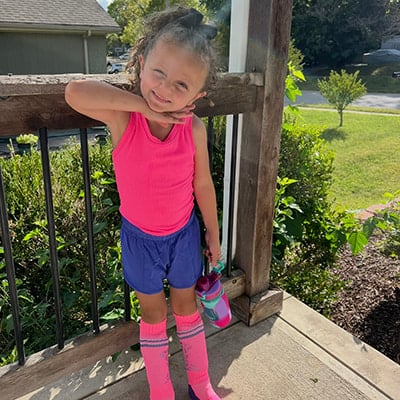
Once Charlotte started the dabrafenib in late 2021, she started to catch up on her developmental milestones. “It has done wonders,” said Emmry. “She takes it every day with no side effects.”
“So much of the energy we were giving her was being gobbled up by the LCH, and her poor body didn’t have a chance to grow,” said Dr. Hays. “It’s so good to see her thriving now.”
Charlotte did have a very serious sepsis scare in the spring of 2022, but otherwise she has been healthy and stable. Her immune system has been strong enough to go swimming, go to preschool, join a soccer team and take family trips around the country and abroad.
“It’s been a very long, bumpy road, but we've had three years of living life normally,” said Emmry. “It's as smooth sailing as it can be with a kindergartner who acts like a teenager.”
Monitoring a very bright future
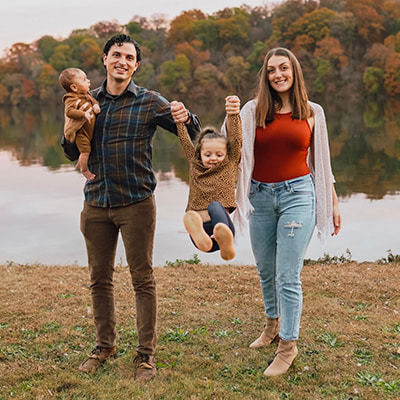
For now, Charlotte visits Children’s Mercy every 6 to 12 months for PET scans and a blood test that can measure the number of copies of the BRAF mutation in her blood.
“Her first PET scan looked like she had disease everywhere — in her bones, her ribs, her spleen, everywhere,” remembered Dr. Hays. “The last few scans have been completely normal. It’s really great news.”
Because dabrafenib is a newer therapy, doctors don't know the long-term effects. The global histiocytosis community continues to discuss how long patients with LCH should take these agents. Charlotte’s family and care team are starting to talk about taking her off the drug, but they haven't made any decisions yet.
“We’re trying to incorporate as many ways to monitor the disease as possible,” said Dr. Hays. “It’s an ongoing conversation.”
In the future, Charlotte will be seen at least once a year to check for LCH recurrence and watch for any long-term impacts of chemotherapy.
“I’m excited to see who she grows into,” said Emmry. “She's such a strong kid, and she’s been through so much. My daughter is a trooper! I pray my baby girl gets to live a long and beautiful life.”
“She is a very spunky, spirited young lady who is going to do some amazing things in life,” agreed Dr. Hays.