
Vaccine Update: Confidence Starts with Trust: Tools for Successful Vaccine Conversations
Vaccine conversations have become increasingly complex in today’s information environment. Families are often exposed to conflicting messages about vaccines and may struggle to determine what information is accurate and who they can trust. Research consistently shows that trust in a health care clinician is one of the strongest factors influencing vaccine decisions. Health care professionals are frequently identified as caregivers’ most trusted source of vaccine information.
When clinicians ask how they can best educate families about vaccines, the answer often begins with relationship-building. People are more likely to consider and accept health recommendations when they trust the individual delivering the message. Establishing a respectful, ongoing relationship creates opportunities for meaningful conversations, even when caregivers are initially hesitant.
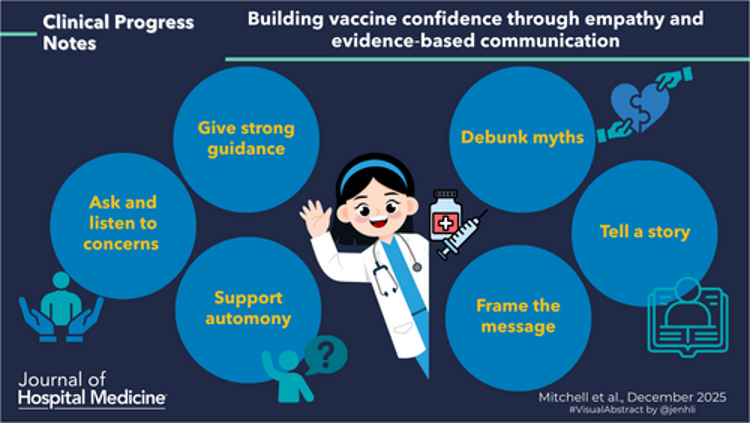
Strategies for Building Vaccine Confidence
- Foster collaborative partnerships and meet families where they are. Engage them in open, individualized conversations about vaccines. Recognize that vaccine decisions are influenced by individual experiences, beliefs and concerns. Tailoring conversations to the family’s needs can improve communication and engagement.
- Use calm, respectful and non-judgmental communication. Caregivers are more likely to engage in meaningful conversations when they feel heard and respected. Responding with empathy and understanding helps build trust, fosters productive dialogue and creates opportunities for continued discussions over time.
- Provide clear, consistent and evidence-based information. Caregivers are more likely to trust information that is straightforward, transparent, and consistent across health care encounters.
- Ask open-ended questions. Understanding what caregivers think and feel about vaccines allows clinicians to address specific concerns rather than making assumptions.
- Seek to understand caregivers’ fears and motivations. Listening first can help identify the underlying concerns driving vaccine hesitancy and create opportunities for more productive discussions.
- Share personal stories and real-world experiences. Research suggests that stories about children and families affected by vaccine-preventable diseases can be powerful because they help caregivers connect emotionally with the potential consequences of disease.
- Help families identify misleading health information. Discuss how to evaluate health claims and provide resources such as How to Spot Misleading Health Claims to help caregivers navigate misinformation.
Resources for Clinicians
- Communicating with Families and Promoting Vaccine Confidence
- Immunization Discussion Guides
- Free online module: Increasing Immunization Confidence (Bodyswaps)
- Video: How to Make a Truth Sandwich
- Parent Handout for Spotting Misleading Health Claims
During the rollout of the COVID-19 vaccine, I cared for many families who expressed concerns about vaccination. Because trusting relationships had already been established, I was able to have open conversations about their concerns and provide evidence-based information without pressure or judgment. While many families initially declined vaccination, I respected their decisions and remained available as a trusted source of support and guidance. Over time, several caregivers returned with additional questions and sought further information. These ongoing conversations ultimately led many of them to feel comfortable choosing vaccination for themselves and their children. This experience reinforced an important lesson: vaccine confidence is rarely built through a single conversation. Rather, it develops through trust, empathy and continued engagement.
References:
- Talking with vaccine hesitant parents. American Academy of Pediatrics. American Academy of Pediatrics. October 9, 2025. Accessed August 1, 2026. https://www.aap.org/en/patient-care/immunizations/communicating-with-families-and-promoting-vaccine-confidence/talking-with-vaccine-hesitant-parents/
- Gagnéur A, Gutnick D, Berthiaume P, Diana A, Rollnick S, Saha P. From vaccine hesitancy to vaccine motivation: a motivational interviewing based approach to vaccine counselling. Hum Vaccin Immunother. 2024;20(1):2391625. doi:10.1080/21645515.2024.2391625
- Kaushik A, Fomicheva J, Boonstra N, Faber E, Gupta S, Kest H. Pediatric vaccine hesitancy in the United States: the growing problem and strategies for management including motivational interviewing. Vaccines. 2025;13(2):115. doi:10.3390/vaccines13020115
- Marotta S, McNally V. Increasing vaccine confidence through parent education and empowerment using clear and comprehensible communication. Acad Pediatr. 2021;21(4 Suppl):S30-S31. doi:10.1016/j.acap.2021.01.009
- Mitchell PG, Hammershaimb EA, Cataldi JR. Building vaccine confidence through empathy and evidence-based communication. J Hosp Med. 2025;20(12):1342-1347. doi:10.1002/jhm.70116