
Systematic Screening for Sepsis/Septic Shock
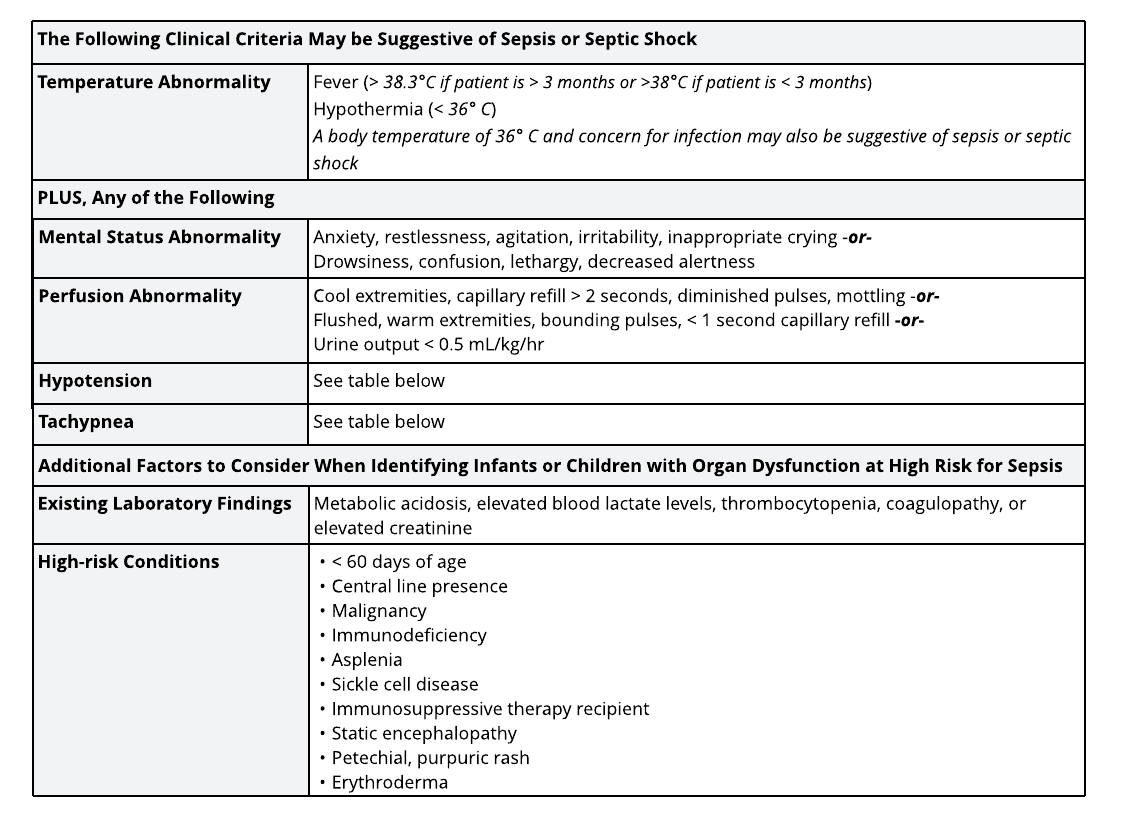
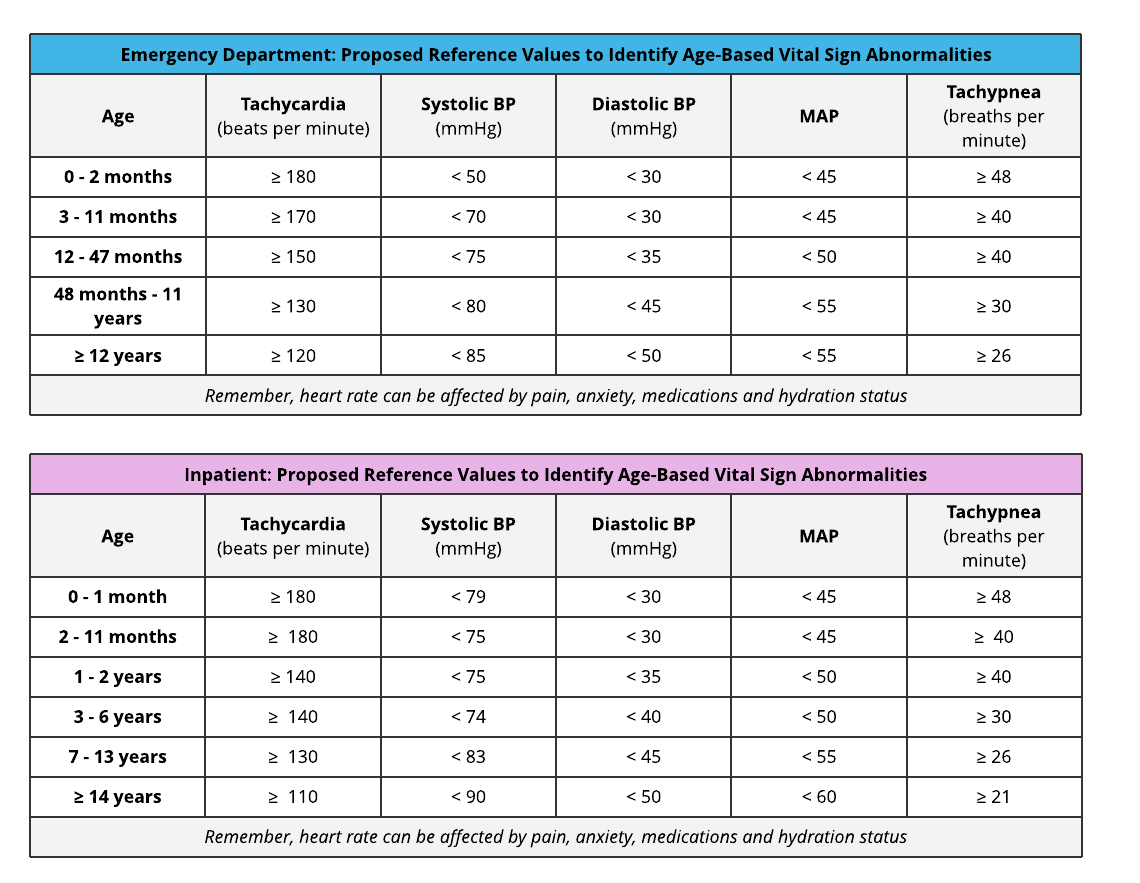
Phoenix Criteria for Sepsis and Septic Shock in Children |
|
|
References
Children's Hospital of Philadelphia. Signs and symptoms concerning for sepsis and septic shock. Accessed July 31, 2026. https://www.chop.edu/clinical-pathway/sepsis-emergency-department-inpatient-picu-clinical-pathway
Goldstein B, Giroir B, Randolph A; International Consensus Conference on Pediatric Sepsis. International pediatric consensus conference: definitions for sepsis and organ dysfunction in pediatrics. Pediatr Crit Care Med. 2005;6(1):2-8. doi:10.1097/01.PCC.0000149131.72248.E6
Gupta S, Sankar J. Advances in shock management and fluid resuscitation in children. Indian J Pediatr. 2023;90(3):280-288. doi:10.1007/s12098-022-04434-3
Merchant RM, Topjian AA, Panchal AR, Cheng A, Aziz K, Berg KM, Lavonas EJ, Magid DJ; on behalf of the Adult Basic and Advanced Life Support, Pediatric Basic and Advanced Life Support, Neonatal Life Support, Resuscitation Education Science, and Systems of Care Writing Groups. Part 1: executive summary: 2020 American Heart Association Guidelines for Cardiopulmonary Resuscitation and Emergency Cardiovascular Care. Circulation. 2020;142(suppl 2):S337-S357. doi:10.1161/CIR.0000000000000918
Rutman L, Richardson T, Auletta J, et al; Improving Pediatric Sepsis Outcomes Collaborative Investigators. Association between Child Opportunity Index and paediatirc sepsis recognition and treatment in a large quality improvement collaborative: a retrospective cohort study. BMJ Qual Saf. Published online June 3, 2025. doi:10.1136/bmjqs-2024-017844
Schlapbach LJ, Watson RS, Sorce LR, et al; Society of Critical Care Medicine Pediatric Sepsis Definition Task Force. International consensus criteria for pediatric sepsis and septic shock. JAMA. 2024;331(8):665-674. doi:10.1001/jama.2024.0179
Weiss SL, Fitzgerald JC. Pediatric sepsis diagnosis, management, and sub-phenotypes. Pediatrics. 2024:153(1):e2023062967. doi:10.1542/peds.2023-062967
Weiss SL, Peters MJ, Oczkowski SJW, et al. Surviving Sepsis Campaign international guidelines for the management of sepsis and septic shock in children 2026. Pediatr Crit Care Med. 2026;27(4):379-434. doi:10.1097/PCC.0000000000003927
These pathways do not establish a standard of care to be followed in every case. It is recognized that each case is different, and those individuals involved in providing health care are expected to use their judgment in determining what is in the best interests of the patient based on the circumstances existing at the time. It is impossible to anticipate all possible situations that may exist and to prepare a pathway for each. Accordingly, these pathways should guide care with the understanding that departures from them may be required at times.