
The Complex Neurobehavioral Unit (CBNU): Lewis’s Story
Meet Lewis
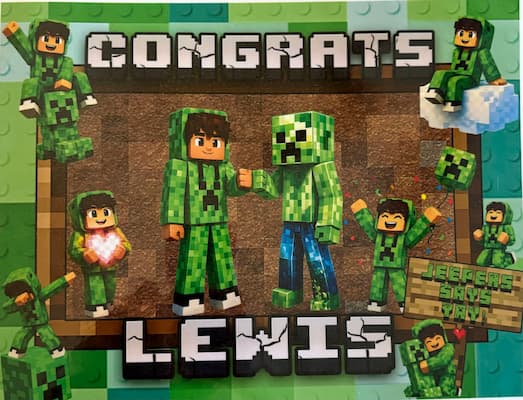
Lewis is a huge-hearted 5th grader with formidable Minecraft skills. At age 5, Lewis was diagnosed with Attention Deficit Hyperactivity Disorder (ADHD). Known for being a great friend, Lewis was also dealing with intermittent outbursts he found hard to control. His unsafe behaviors were sporadic but intense, and he was eventually also diagnosed with Disruptive Mood Dysregulation Disorder (DMDD).
“We have been on a journey to get Lewis effective treatment, but it's been difficult to find,” said Jennifer, Lewis’s mom. "We had regular therapy, case management, medication management, a very supportive program at school. We were trying all the things.”
"Nothing was helping,” said Lewis.
In late 2025, another escalation brought them to the Emergency Room, where a Children’s Mercy physician recommended that Jennifer and Lewis’s stepdad, Jamel, contact the Partial Hospitalization Program (PHP). The PHP is a daily program for patients with emotional or behavioral challenges who need more support than weekly outpatient visits can provide.
After an initial interview to understand Lewis’s medical history, diagnostic journey and therapy experience, he was admitted into the PHP’s Complex Neurobehavioral Unit (CBNU) in January 2026.
Custom programs for one-of-a-kind kids
The CBNU provides specialized treatment for kids with behaviors that can put themselves and/or others at risk. The unit uses Applied Behavior Analysis (ABA) to help families understand why those behaviors are happening and what interventions work for their child. There’s no standard program; each patient moves at their own pace.
On his first day, Lewis met his primary and secondary behavioral health technicians (BHTs), Grace and Liz . Grace and Liz would be Lewis’s closest companions during his three months at the PHP.
“I was afraid at first, until I got there, and then I wasn’t scared anymore,” said Lewis, who said he was comforted by how happy people sounded at the PHP. “The people were really nice.”
The CNBU team’s immediate goals were to help Lewis reduce his unsafe behaviors and teach him coping strategies and replacement behaviors. His treatment was a collaboration between Lewis, his family and the PHP’s multidisciplinary staff (including psychiatrists, pediatricians, therapists, psychologists, board-certified behavior analysts and more).
Grace, Liz and Lewis bonded quickly over Minecraft, Legos and a shared love for having a good time. “Lewis is funny, very goofy and likes to make people laugh,” said Liz.
When Lewis began at the CBNU, he would get frustrated quickly, especially with schoolwork, and could only wait for adult attention or a tangible reward for a minute or so.
“Any time you learn a new skill or are in a new setting with new people, it can be really difficult,” said Grace. She and Liz walked with Lewis through a treatment plan that would help tolerate big feelings.
“Grace and Liz worked with him on a daily basis, minute by minute, helping monitor for common triggers and arranged short-term feedback loops to help him understand self-control, self-regulation and working toward longer-term goals,” said Amanda Zangrillo, PsyD, BCBA-D, CNBU Director.
“Everything takes time,” said Liz. “Not everything is going to be fixed immediately. It takes patience.”
When Lewis did get upset, they would wait until he was calm then talk about what had happened and what they learned. Some of their best conversations happened while Liz and Lewis played Minecraft together.
Rewriting the story
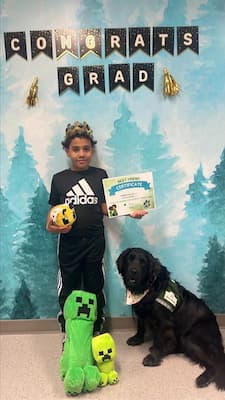
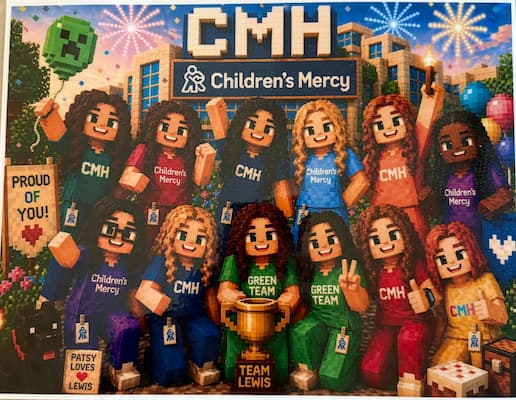
“Something that was really important to Liz and I was telling Lewis he was phenomenal and has so much to offer the world,” said Grace. “He would talk about feeling like he was a bad kid or disappointing people. We told him everyone gets upset. Here’s what Liz and I do when we get upset.”
“Over time, Lewis had started to develop a narrative about what his behavior and some of his choices meant,” said Dr. Zangrillo. “We were rewriting that narrative with him.”
“It was such a relief that he was getting really good care and support,” said Jennifer. “I knew they had such a good handle on the situation. It helped my mental health during that time.”
Lewis practiced. And practiced. And practiced.
“They helped me with strategies to stay calm,” he said, demonstrating one, tapping between his fingers. He'd do deep breathing when he got upset or take a break in a bean bag. He said he learned to share what he was experiencing and that he didn’t always need to have an adult with him — he could do things on his own. He began to take the lead in his own treatment.
“Lewis asked, ‘If I have a good week, could I have a room filled with bean bags?’” said Liz. "So on Fridays we would do a bean bag party.” If Lewis earned enough tokens that week, they’d cover the floor with huge bean bags and do karaoke to “I Want It That Way.”
Lewis said he chose that reward so everyone could be part of the party. He liked being able to spend time with other kids and with Patsy, the facility dog. He and Pasty would do scavenger hunts together for Minecraft Legos (attached to dog treats).
“He got really good at verbalizing what was upsetting him and communicating his wants and needs verbally,” said Grace. Lewis even began to identify when he didn’t achieve his own goals. “It was super cool to see him self-monitoring his behavior.”
Taking new skills home
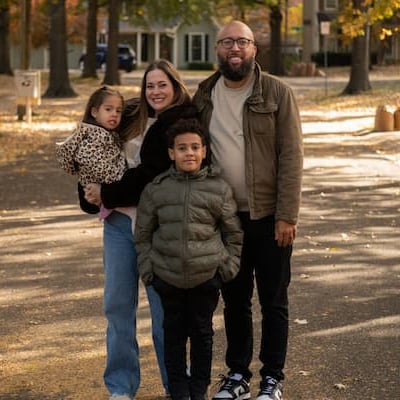
The PHP reviews behavior data with team members and families every day. “When we start to see sustained patterns of success, we can start to take off the ‘training wheels,’” said Dr. Zangrillo.
Patients practice the skills they’ve learned in different settings and with different people while still at the PHP, so they’ll be able to bounce back from triggers in the real world. As they looked toward discharge, the PHP team coordinated with Lewis's school to help set him up for success.
“The PHP made him feel so special and loved, I think the hardest part was leaving,” said Jennifer. “He was sad for weeks leading up to it, knowing he would miss everyone so much.”
His team was determined Lewis would leave feeling encouraged.
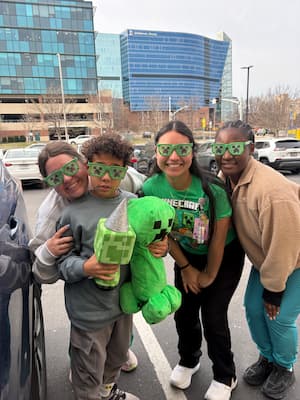
“Oh, we threw him a party,” laughed Grace. The team wore Minecraft t-shirts and sunglasses, threw a goodbye beanbag party, and made a tunnel to clap him out as he left.
The family met with the PHP team weekly for follow-ups at first, then moved to bi-weekly, then once a month. Grace and Liz have been working out how to play Minecraft remotely as a future follow-up incentive.
“He grew a lot here, and it was rewarding to see what we’re doing has impact,” said Liz.
Jennifer appreciates how accessible the PHP team has been since Lewis left the program. “They’ve been great at giving me a structured approach to transitions like school starting,” she said. “It really helped me advocate for him.”
“The skills the team taught Lewis are now paying dividends in his school and home life and out in the community,” said Dr. Zangrillo, who wants other struggling families to know there’s hope for them at the PHP. “It takes work, but we will be right there with you every step.”