Ependymoma: Koda’s Story
Meet Koda
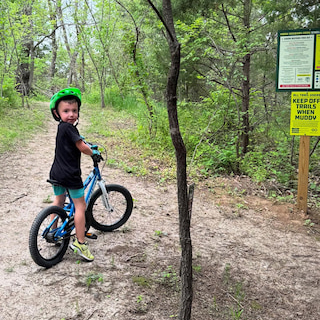
6-year-old Koda is the kind of kid who rarely slows down. Whether he’s riding bikes, fishing with his parents, Ryan and Lesley, playing baseball, learning drums or keeping up with his older sister, Dylan, he’s always on the move.
“He’s only got two speeds,” Ryan, joked. “On and off.”
So two years ago, when Koda began getting sick throwing up in the mornings, his parents knew something wasn’t quite right.
“He would just get sick and go right back to playing,” Ryan said. “It didn’t seem normal, but it didn’t seem severe either.”
What seemed like a small concern quickly became something much bigger.
A frightening diagnosis
During an MRI, clinicians discovered a rare pediatric brain tumor called an ependymoma. Additional imaging followed immediately, and Koda’s family was instructed to head straight to Children’s Mercy.
“They were expecting us when we got there,” Ryan said. “That’s when we realized how serious it was.”
Soon after arriving, the family met with David Garcia, MD, Medical Director, Neurosurgery Trauma Care, who explained the urgency of the situation.
“He told us, ‘I need to take this out of your son,’” Ryan recalled.
Koda’s team scheduled surgery for the very next morning.
For Ryan and Lesley, surgery day was filled with fear, uncertainty and difficult decisions. During the procedure, surgeons successfully removed 99% of the tumor before discovering a small portion attached to Koda’s brainstem.
The care team explained the risks of continuing surgery, including potential complications affecting movement, blinking and other involuntary functions, as well as the risks of leaving that part of the tumor behind.
Ryan remembers asking Dr. Garcia one question:
“I need you to talk to me like a dad. Would you leave that in your child?”
The answer came without hesitation.
“There’s no chance I would leave that in my child,” said Dr. Garcia.
The family chose to move forward with complete removal.
The moment everything changed
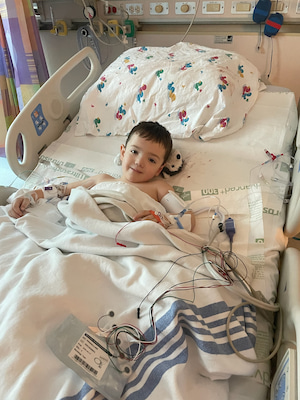
Hours later, Koda’s parents walked into his hospital room and saw something they had hardly dared to hope for.
“He was awake and smiling,” Lesley said.
Before surgery, there had been concerns about whether Koda would be able to breathe independently or talk afterward.
“So seeing him sitting up and smiling was the biggest relief,” she said.
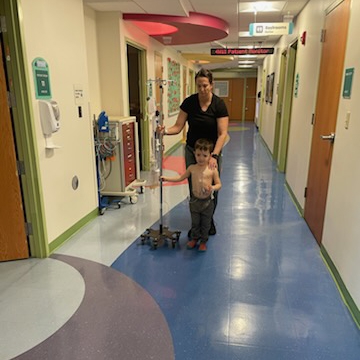
Koda’s recovery exceeded expectations. Although his family had been told he might spend several weeks in the hospital, he was discharged just over a week after surgery.
Following surgery, Koda completed six weeks of proton therapy radiation as part of his treatment plan.
Back to being a kid
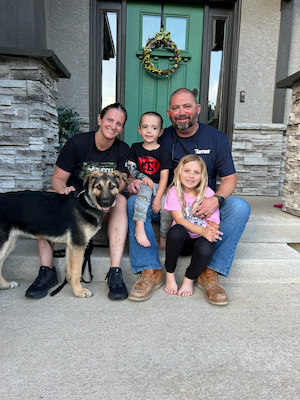
Today, Koda continues routine follow-up scans and care through Children’s Mercy. His family says the support they received extended far beyond medical treatment.
Before leaving the hospital, Koda’s team connected them with oncology resources, financial support information and community organizations that helped them navigate the months ahead.
“We left feeling like we had the tools and resources we needed,” Lesley said.
Now 6, Koda is back to doing what he loves, including attending Ninja Warrior classes.
His mom affectionately calls him her “Sour Patch Kid.”
“He’ll randomly come up and say, ‘Mom, you’re so pretty,’” Lesley said. “And then two minutes later he’s wild again.”
For Ryan and Lesley, sharing their story is about gratitude for the care their son received and the future he has ahead of him.
“What we have here in Kansas City is incredible,” Ryan said.
Their hopes for Koda are simple.
“We just want him to be a normal kid,” Ryan said.
And thanks to expert care, ongoing support and Koda’s resilient spirit, he gets to be exactly that.