
Get updates
Have a parenting hack to share? Or a topic you'd like to see?
Child swim safety: 7 tips for parents and caregivers

Contributing Authors
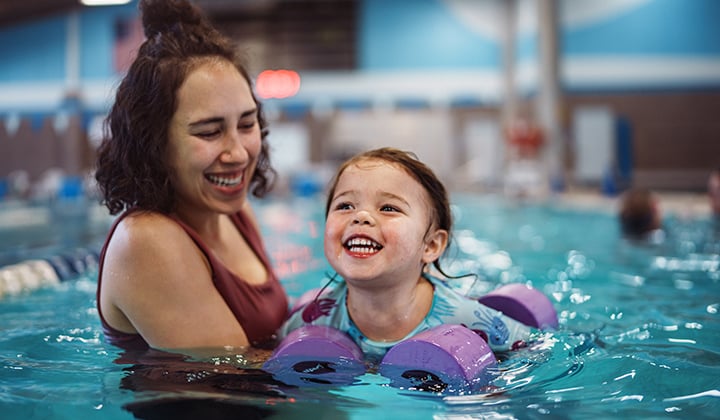
Summer is here, pools are open and families are spending more time in and around water. While water play is a fun part of the season, it’s also one of the most important times to think about child swim safety.
Drowning is a leading cause of unintentional injury-related death for young children, and it often happens quickly and silently. The good news is most water-related accidents are preventable when families use multiple layers of protection.
Here’s what every parent and caregiver should know to help keep kids safe around pools, lakes and other bodies of water.
Why swim safety matters for children
Drowning can happen in as little as 2 inches of water, and it doesn’t look like what we see in movies. There’s no splashing or yelling for help. For toddlers, the highest risk is often home pools. For older children and teens, natural water like lakes and rivers pose greater dangers. That’s why prevention, preparation and constant supervision are critical.
7 water safety tips every parent or caregiver should know
1. Always assign a “water watcher”
The most effective safety measure is close, constant supervision. A designated water watcher should:
- Stay within arm’s reach of young children (“touch supervision”)
- Avoid phones, alcohol or other distractions
- Rotate duties every 15–20 minutes to stay alert
Even when lifeguards are present, parents remain the first line of protection.
2. Choose life jackets for kids over floaties
Inflatable floaties and arm bands are toys, not water safety equipment. Instead:
- Use U.S. Coast Guard–approved life jackets
- Especially for boating, open water, non-swimmers and young children
- Make sure the life jacket fits properly and is worn consistently
3. Secure your home pool area
If you have a pool at home, physical barriers can prevent unsupervised access. Recommended swimming pool safety guidelines include:
- A 4‑sided fence at least 4-feet high
- Self-closing, self-latching gates
- Removing or locking ladders when the pool is not in use
These steps dramatically reduce the risk of accidental drowning.
4. Add extra layers of protection
Alarms can provide an added safety net, especially for families with young children. Consider:
- Pool alarms
- Door and gate alarms
- Window guards or doorknob covers
While alarms don’t replace supervision, they can buy precious seconds in an emergency.
5. Start swim lessons when your child is ready
Many children can begin swimming lessons as early as age 1, depending on development and comfort level. Keep in mind:
- Lessons should be age-appropriate
- Skills build over time with consistent practice
- No child is ever “drown proof,” even with swim training
Supervision is always essential.
6. Learn CPR – it can save a life
In an emergency, CPR can double or even triple survival chances. Parents and caregivers should:
- Become CPR certified
- Keep rescue equipment nearby (life ring, reaching tool, phone, AED if available)
Being prepared can make all the difference.
7. Be aware of increased risks for some children
Some children may need extra precautions around water, including those with:
- Autism, due to wandering or attraction to water
- Note: Drowning is a leading cause of death among children with autism, so it is important to take precautions.
- Epilepsy, which requires close supervision and medical guidance
- Heart conditions such as long QT syndrome
- Medications that affect balance or alertness
If your child has a medical condition, talk with your pediatrician about safe water activities.
What you can do today
- Assign a water watcher anytime kids are near water
- Check your home for proper barriers and alarms
- Enroll your child in swim lessons
- Learn CPR
A few simple steps can save a life.
Get updates
Have a parenting hack to share? Or a topic you'd like to see?
Related Posts
- Hitting and biting: what parents need to know
- Debunking myths about COVID-19
- How to promote diversity and inclusion in your child’s life
- What every parent should know about preventing child trafficking
- The No. 1 rule about cleaning out earwax
- Food allergies: are more kids allergic to food or are we just more aware?
- Bedwetting: What causes it and when to be concerned?
- The great cover-up
- All about strep throat
- A parent’s guide to discussing white privilege