
Outbreaks, Alerts & Hot Topics: Well, I Feel Measly
Over the last several years, there has been a lot of discussion surrounding measles, a virus that infected as many as 400,000 people annually in the U.S. during the pre-vaccine era.1 In the year 2000, measles was declared eliminated from the U.S. largely because of coordinated vaccine efforts and sustained uptake of the vaccine. That status is unfortunately being reviewed by the Pan American Health Organization this winter.2 We all remember the outbreak of measles that started in Gaines County, Texas, in 2025, and the conversation has continued since. In 2025, there were 2,289 cases of measles and three deaths.1 As of Sept. 17, 2026, between 3,387 and 3,471 cases of measles were reported nationally, with two infant and two adult deaths reported by the Commonwealth of Pennsylvania.1,3,4,5 On Sept. 4, the Missouri Department of Health & Senior Services issued a Health Alert about rising cases in the Midwest to increase vigilance for this infection and encourage vaccination efforts.6 This alert was followed by an announcement from the Missouri Department of Health & Senior Services about a possible measles exposure at a Sedalia train station.7 While there is no current measles outbreak in Kansas or Missouri there have been two confirmed cases in Kansas and 10 confirmed cases in Missouri as of Sept. 18, 2026.1,8 These events are a reminder of how quickly the situation can change within our community. Let’s discuss clinical presentation and resources for measles diagnosis.
Clinical Presentation
The timeline of infection, immunization status and exposure history are critical when developing a differential diagnosis and assessing the likelihood of measles. Measles presents as an acute viral disease with several nonspecific features initially. Following exposure, the incubation period is typically 11-12 days before the onset of prodromal symptoms and approximately 14 days before rash development.
During the prodromal phase, symptoms include fever, cough, coryza (a fancy term for nasal inflammation) and conjunctivitis. Small white papules called Koplik spots may appear on the buccal mucosa. When recognized, these lesions are pathognomonic for measles and could allow you to make the diagnosis a couple of days before rash onset.
After several days of fever, the rash begins. It starts on the face, at times behind the ears, then marches downward to involve the remainder of the body. It is important to keep in mind how rashes appear on different skin tones when considering this diagnosis. After several days, the rash will start to fade in the same order it appeared. Infected individuals are contagious for four days before the rash to four days after the rash begins.9,10
Exposure history is relevant for the 21 days before the rash develops. Relevant exposures include international travel, domestic travel to areas with known measles transmission, or documented contact with a confirmed measles case. The Johns Hopkins Measles Tracker can be a useful resource for identifying areas with active measles transmission.
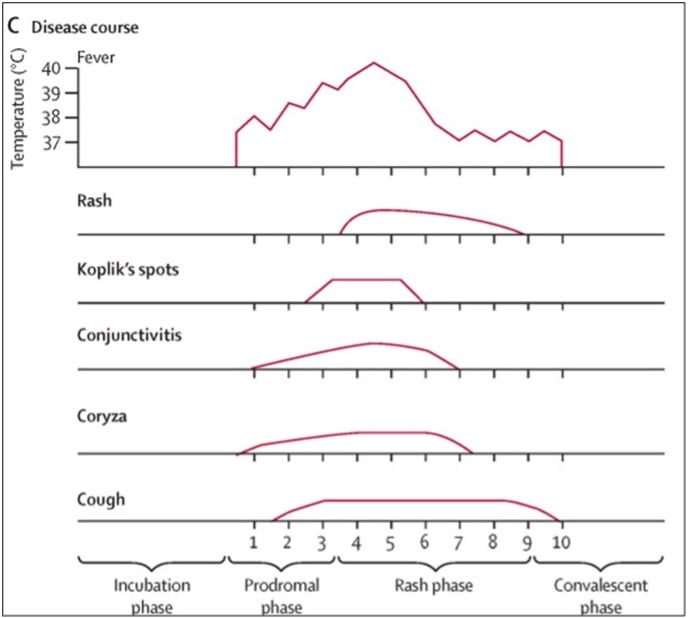
Figure 4 from Moss WJ. Measles. Lancet. 2017;390(10111):2490-2502. doi:10.1016/S0140-6736(17)31463-0
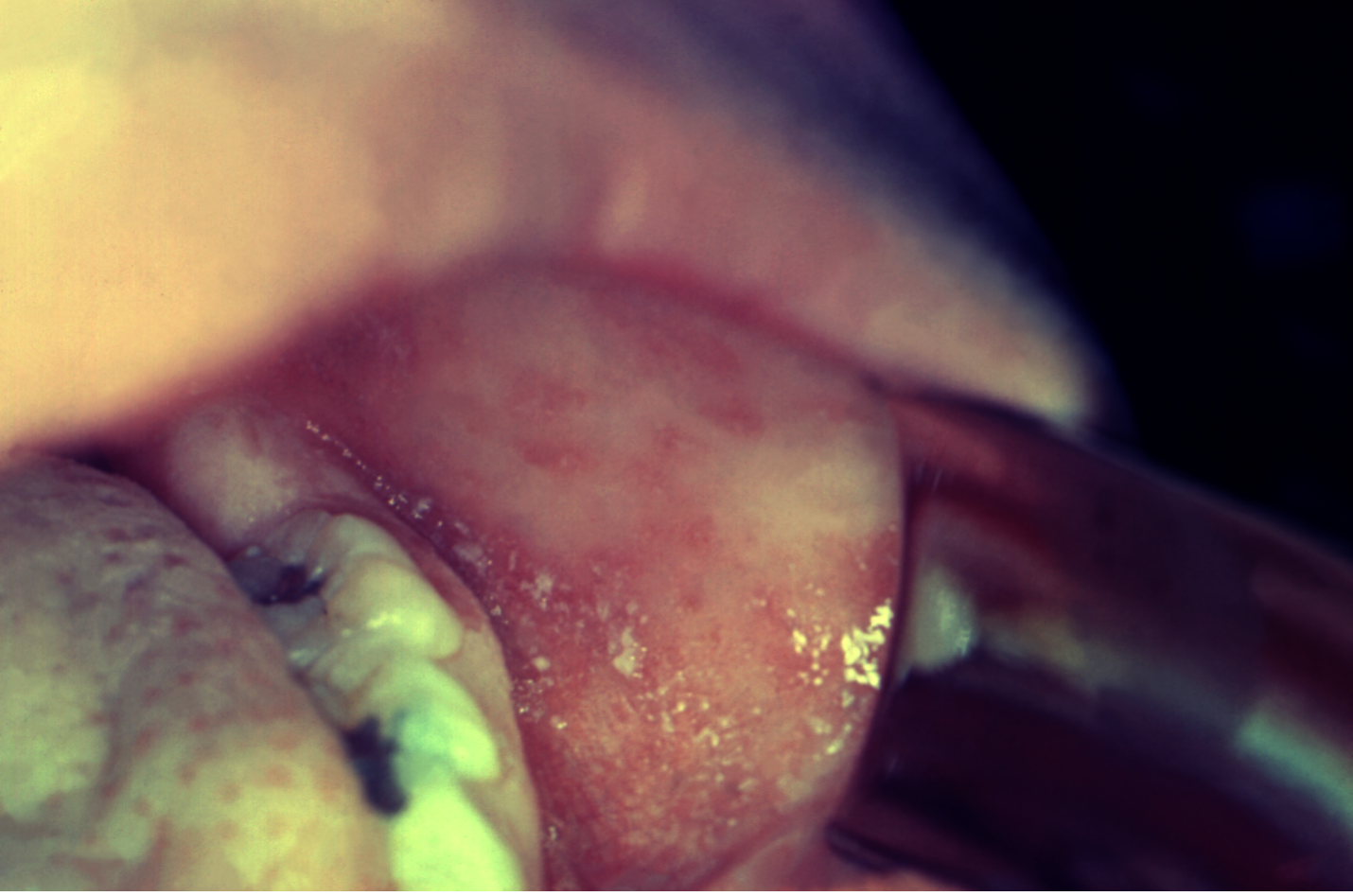
Example of Koplik spots https://wwwn.cdc.gov/phil/Details.aspx?pid=24425
Diagnosis:
Given the complexity of measles evaluation and infection control, clinicians should use available evidence-based resources. The Children’s Mercy Measles Clinical Pathway provides comprehensive recommendations for the diagnosis, management and prevention of measles in pediatric patients.
If measles is suspected, immediate infection prevention measures are essential: the patient and family should be masked upon arrival and promptly placed in a negative pressure room (if not available, the exam room door should be closed). Health care personnel should use appropriate airborne precautions: N95 mask with proper fit testing or a powered air-purifying respirator (PAPR). Clinicians caring for these children should have evidence of immunity (check your vaccine record or serologies).
Diagnostic testing should be coordinated with local or state public health authorities. Real-time polymerase chain reaction (PCR) testing from nasopharyngeal or throat swabs is the preferred diagnostic test and is most sensitive when performed within three days of rash onset. Measles IgM serology can confirm infection but is most sensitive three days or more after rash onset.
Depending on your clinical location, you will speak with different health departments to help facilitate testing.
- Missouri locations: (573) 751-3334 or (800) 392-0272.
- Kansas locations: (877) 427-7317, option 5.
- Other states: Contact information is available through the Council of State and Territorial Epidemiologists (CSTE) 24/7 reporting directory.
When patients are discharged, they should remain masked and be escorted from the facility in a manner that minimizes contact with others. Patients and families should be instructed to isolate at home until the health department is in touch with them.5,7
Management:
Management of measles is primarily supportive and focuses on maintaining hydration, controlling fever and monitoring for complications.
Vitamin A supplementation in nutritionally deficient individuals decreases the risk of mortality associated with measles infection. Although evidence for benefit in nutritionally replete individuals is limited, the World Health Organization recommends all children receive vitamin A regardless of country of residence.7 Recommended vitamin A dosing is age-based:
<6 months: 50,000 international units daily x 2 days
6-11 months: 100,000 international units daily x 2 days
≥12 months: 200,000 international units daily x 2 days
Complications:
The most common complications from measles infection include pneumonia, acute otitis media, diarrhea and dehydration. Rare but severe neurologic complications include acute encephalitis, measles inclusion body encephalitis and subacute sclerosing panencephalitis, the latter of which occurs several years following measles infection. There is also increasing evidence for measles-induced immune amnesia. This is where memory T cells and B cells are dramatically altered after a measles infection. Following measles infection, T cells and B cells have strong immunity toward measles, but not toward other immune triggers encountered before measles.11-13
Prevention:
Vaccination remains the most effective strategy for preventing measles. Two doses of the measles-mumps-rubella (MMR) vaccine provide excellent protection and are recommended for all eligible children and nonimmune adults. During measles outbreaks or before international travel, the MMR vaccine can be administered earlier than the routine schedule, including for infants 6 to 11 months of age, to provide additional protection, although it may not count toward the infant’s two-dose series. In addition to maintaining high community vaccination rates, prompt identification and isolation of suspected cases, appropriate use of airborne precautions, and timely public health notification are critical measures to prevent transmission and limit outbreaks.6,9
Post-exposure prophylaxis depends on the time since initial exposure, the individual’s immune status and their age/medical conditions. Individuals with evidence of immunity and those presenting seven days or more following initial exposure do not require post-exposure prophylaxis. For individuals who have received one dose of MMR vaccine, a second dose may be administered if at least 28 days have passed since the last dose.
For susceptible individuals presenting within zero to six days of exposure, post-exposure prophylaxis may reduce the risk of disease. If exposure occurred within the previous 72 hours and the patient is ≥6 months of age, they should receive a dose of MMR vaccine. For infants younger than 6 months, individuals presenting four to six days after exposure, pregnant individuals without evidence of immunity, and those who are severely immunocompromised, passive immunization with immunoglobulin (intramuscular or intravenous, depending on the clinical scenario) is recommended.9
Bottom Line:
Measles is much more of a diagnostic consideration for the children we care for now than it was even a few years ago. To ensure you are protected and able to care for sick children like always, please revisit your immunization history, as you need to have received two doses of MMR, have laboratory evidence of immunity, have laboratory-confirmed disease, or have been born before 1957 in order to be considered protected.9 The evolution of the patient with a fever, upper respiratory infection symptoms and rash will help guide your clinical thinking for measles. If you are concerned about measles infection, speak with your public health department to guide testing.
Resources:
American Academy of Pedatrics Red Book Measles Chapter
Children's Mercy Hospital Measles Clinical Pathway
Missouri Department of Health & Senior Services: Measles
Kansas Department of Health and Environment: Measles
National Foundation for Infectious Diseases: Measles
References:
- Measles cases and outbreaks. U.S. Centers for Disease Control and Prevention. September 18, 2026. https://www.cdc.gov/measles/data-research/index.html
- Update on the review of measles elimination status. Pan American Health Organization. March 2, 2026. https://www.paho.org/en/news/2-3-2026-update-review-measles-elimination-status
- U.S. measles tracker. Johns Hopkins University. Updated September 18, 2026. https://publichealth.jhu.edu/ivac/resources/us-measles-tracker
- Edwards E. Measles cases top 3,000 to reach highest level in three decades, CDC reports. NBC News. September 4, 2026. https://www.nbcnews.com/health/health-news/measles-cases-cdc-pennsylvania-deaths-rfk-jr-rcna596091
- Measles. Commonwealth of Pennsylvania. September 18, 2026. https://www.pa.gov/agencies/health/diseases-conditions/infectious-disease/measles
- Surging measles cases in the Midwest. Missouri Department of Health & Senior Services. September 4, 2026. https://content.govdelivery.com/accounts/MODHSS/bulletins/4283abd
- Missouri DHSS announces possible measles exposure at Sedalia train station. News release. September 4, 2026. https://content.govdelivery.com/accounts/MODHSS/bulletins/4294cd0
- Stay Alert for Measles Cases. Kansas Department of Health and Environment. News release. September 16, 2026. https://www.kdhe.ks.gov/m/newsflash/Home/Detail/2161
- Committee on Infectious Diseases, American Academy of Pediatrics. Measles. In: Kimberlin DW, Banerjee R, Barnett ED, Lynfield R, Sawyer MH, eds. Red Book: 2024–2027 Report of the Committee on Infectious Diseases. 33rd ed. American Academy of Pediatrics; 2024:570-585.
- Moss WJ. Measles. Lancet. 2017;390(10111):2490-2502. doi:10.1016/S0140-6736(17)31463-0
- Hagen A. Measles and immune amnesia. American Society of Microbiology. February 7, 2024. https://asm.org/articles/2019/may/measles-and-immune-amnesia
- Mina MJ, Kula T, Leng Y, et al. Measles virus infection diminishes preexisting antibodies that offer protection from other pathogens. Science. 2019;366(6465):599-606. doi:10.1126/science.aay6485
- Petrova VN, Sawatsky B, Han AX, et al. Incomplete genetic reconstitution of B cell pools contributes to prolonged immunosuppression after measles. Sci Immunol. 2019;4(41). doi:10.1126/sciimmunol.aay6125