
Vaccine Update: Measles Reemergence in the United States - Outbreak Status, Challenges and Response Strategies
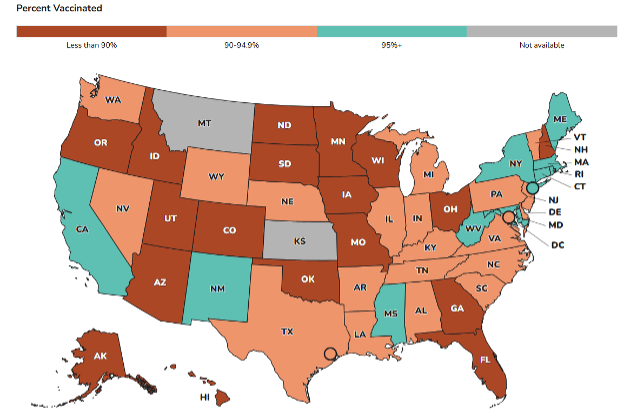
Measles vaccine has been available in the United States since 1963 and is approximately 97% effective at preventing infection after completion of the recommended two-dose series. To achieve herd immunity and interrupt community transmission, at least 95% of the population must be fully immunized. However, the U.S. has fallen below this critical threshold, with only 10 states reporting measles vaccination coverage rates exceeding 95% among children entering kindergarten during the 2025-2026 school year.
Percentage of Children Entering Kindergarten that Have Received Two Doses of Measles Containing Vaccine:
https://www.cdc.gov/measles/data-research/index.html
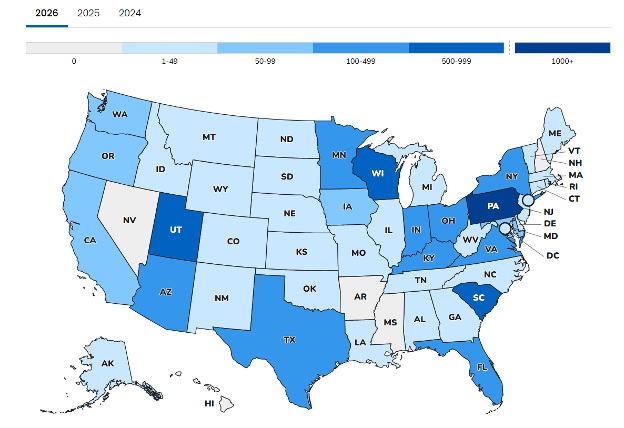
As of Nov. 12, the U.S. has reported 5,412 confirmed measles cases, including only 18 cases among international visitors. This number represents a substantial increase from the 2,289 confirmed cases reported in 2025. Cases have been reported in 47 states/jurisdictions across 43 new outbreaks this year and have resulted in 591 hospitalizations, including 258 pediatric hospitalizations, and at least six deaths.1
Number of Confirmed Measles Cases by State in 2026:
https://www.cdc.gov/measles/data-research/index.html
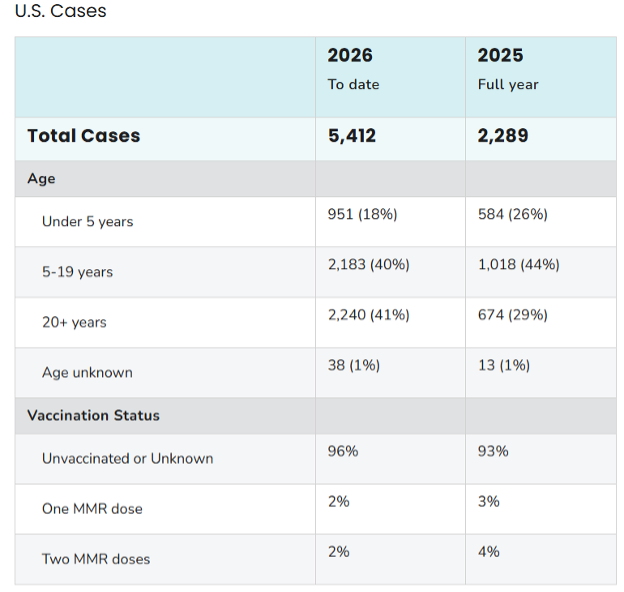
Children made up the majority of measles cases in 2025-2026 and 93%-96% of cases occurred in individuals who were unvaccinated or had unknown vaccination status.
Demographics of Confirmed Measles Cases:
https://www.cdc.gov/measles/data-research/index.html
Measles was declared eliminated in the United States in 2000. Under established criteria, elimination status is achieved when a country sustains the absence of continuous domestic disease transmission for one year or longer. The authority responsible for assessing and verifying measles elimination status in the Americas is the Pan American Health Organization (PAHO) Regional Monitoring and Re-Verification Commission for Measles, Rubella, and Congenital Rubella Syndrome.2 The Commission convened earlier this month and determined that the United States no longer met the criteria for measles elimination, resulting in the loss of its elimination status following ongoing outbreaks and sustained domestic transmission.
This increase in cases is significant because measles is a highly contagious disease that can result in serious complications in approximately 30% of reported cases and has an estimated case-fatality rate of approximately 1 per 1,000 cases. Infants and young children, pregnant individuals, and persons who are immunocompromised are at greatest risk for severe disease, hospitalization and death. In addition to the acute complications of infection, measles may result in significant long-term health consequences, including prolonged immune suppression that increases susceptibility to other infectious diseases. Measles infection causes immune amnesia by directly invading and destroying existing memory B and T cells, erasing up to 73% of the existing antibody repertoire and immune memory. Subacute sclerosing panencephalitis is a severe, delayed neurologic sequela of measles and is characterized by progressive, irreversible degeneration of the central nervous system that is uniformly fatal. The incidence is highest among children infected at younger ages, occurring in approximately 1 in 1,300 children who contract measles before age 5 years and in 1 in 600 infants infected before 12 months of age. Symptom onset is typically six to 10 years following infection but can be as late as 30 years later.3 These risks underscore the critical importance of maintaining high vaccination coverage to prevent disease transmission and protect vulnerable populations.
Measles vaccination includes a two-dose series, with the first dose recommended at age 12-15 months and the second dose at age 4-6 years. In the setting of an ongoing outbreak in the local community, travel to an area with active outbreaks, or international travel, infants 6-11 months of age should receive a single dose of MMR vaccine. These infants who are vaccinated early go on to require two doses of vaccine per the standard recommended schedule.
If a child who lacks immunity is exposed to measles, MMR vaccine should be given to those at least 6 months of age within 72 hours of the exposure if the child does not have a contraindication to vaccination. Infants <6 months of age or those who are unable to receive MMR vaccine should receive intramuscular or intravenous immune globulin within six days of exposure for post-exposure prophylaxis.
It is critically important to assess vaccination status of all children at each health care encounter, give catch-up vaccines when able, and be alert to the symptoms of measles so that cases can be promptly identified, reducing exposure to others. In the current climate of evolving outbreaks, knowledge of local community disease activity and a plan for vaccination and post-exposure prophylaxis are imperative.
References:
- Measles cases and outbreaks. Centers for Disease Control and Prevention. Accessed October 22, 2026. https://www.cdc.gov/measles/data-research/index.html
- Michaud J. Measles elimination status: what it is and how the U.S. lost it. KFF. Accessed October 22, 2026. https://www.kff.org/other-health/measles-elimination-status-what-it-is-and-how-the-u-s-could-lose-it/
- Khetsuriani N, Sanadze K, Abuladze M, Tatishvili N. High risk of subacute sclerosing panencephalitis following measles outbreaks in Georgia. Clin Microbiol Infect. 2020;26(6):737-742. doi:10.1016/j.cmi.2019.10.035