
Pediatric Acute Mastoiditis: Surgical Management by Specific Diagnosis
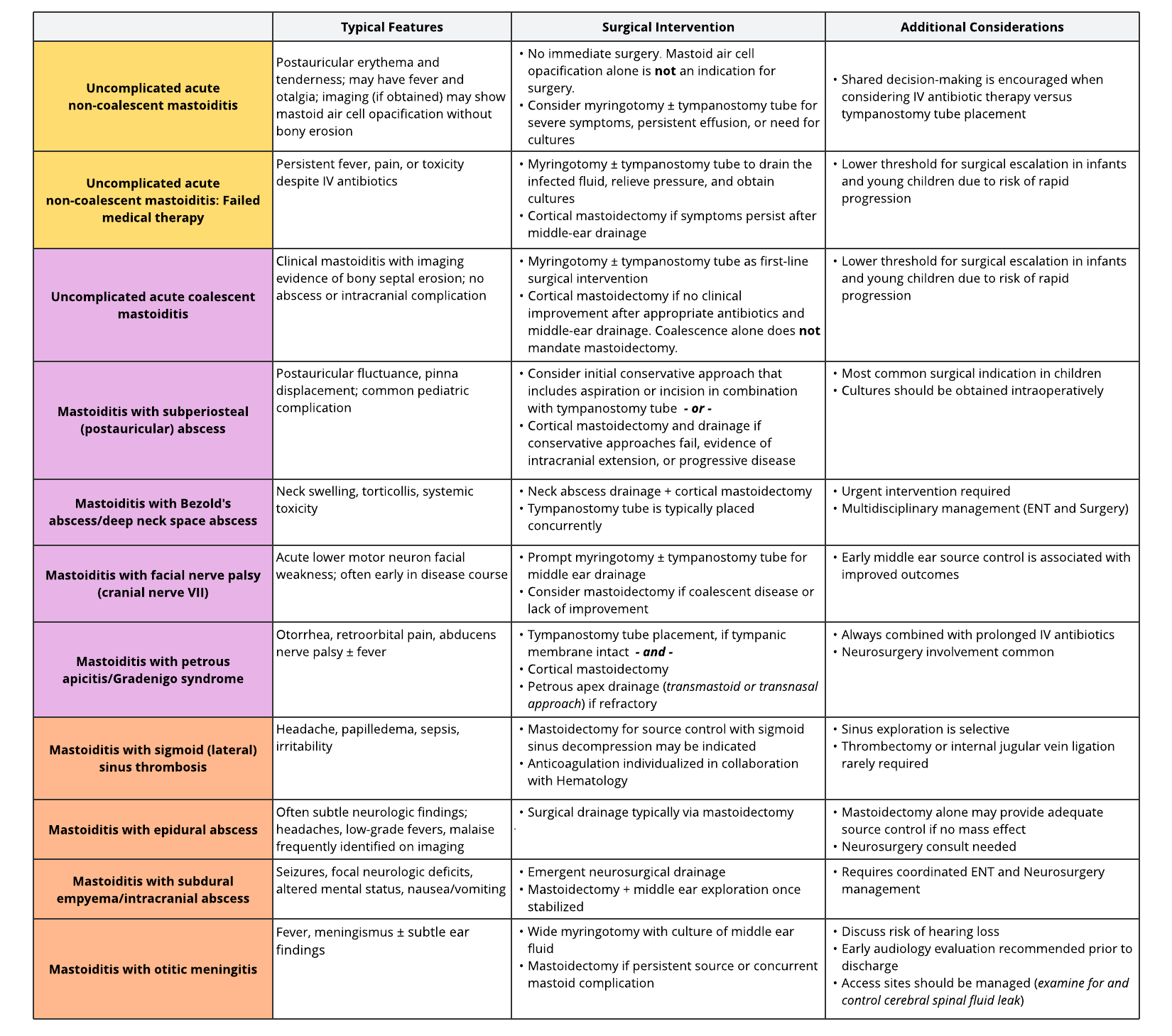
The surgical management of pediatric acute mastoiditis varies widely due to differences in patient presentation, disease severity, availability of subspecialty resources, and evolving evidence. There are no universally accepted standards regarding the timing or extent of surgical intervention, and management decisions should therefore be individualized. Surgical intervention should be guided by clinical judgment, imaging findings, response to medical therapy, and multidisciplinary collaboration, with consideration of local expertise and institutional practices
Immediate source control, regardless of time of day, is appropriate when delay risks neurologic, infectious, or airway compromise. In the absence of these risks, daytime intervention is generally preferred to optimize patient safety and resource availability
References
Abakay MA, Ulusoy HA, Yiğitbay M, Sayin P, Gülüstan F, Hatipoğlu N. Management of acute mastoiditis and accompanying complications in acute patients: single center experience. Med J Bakirkoy. 2022;18:230-237. doi:10.4274/BMJ.galenos.2022.2022.3-22
Anne S, Schwartz S, Ishman SL, Cohen M, Hopkins B. Medical versus surgical treatment of pediatric acute mastoiditis: a systematic review. Larnyngoscope. 2019;129(3):754-760. doi:10.1002/lary.27462
Edwards S, Kumar S, Lee S, Pali BL, Marek Rl, Dutta A. Epidemiology and variability in management of acute mastoiditis in children. Am J Otolaryngol. 2022;43:103520. doi:10.1016/j.amjoto.2022.103520
Esce AR, Trujillo SA, Hawley KA. Clarifying the diagnosis and management of acute uncomplicated pediatric mastoiditis. Ann Otol Rhinol Laryngol. 2024;133(9):769-775. doi:10.177/00034894241261272
Favre N, Patel VA, Carr MM. Complications in pediatric acute mastoiditis: HCUP KID analysis. Otolaryngol Head Neck Surg. 2021;165(5):722-730. doi:10.1177/0194599821989633
Friesen TL, Hall M, Ramchandar N, Berry JG, Jiang W. Evolving management of acute mastoiditis: analysis of the Pediatric Health Information System database. Otolaryngol Head Neck Surg. 2023;169(2):382-389. doi:10.1002/ohn.286
Fujiwara RJT, Alonso JE, Ishiyama A. Temporal trends and regionalization of acute mastoiditis management in the United States. Otol Neurotol. 2021;42(5):733-739. doi:10.1097/MAO.0000000000003050
Kalmanson OA, Marinelli JP, Chern A, Nellis JC, Ahsan SF, McRackan TR, Carlson ML. Otolaryngology and neurotology. In: Pasha R, Golub JS, Chern A, eds. Otolaryngology-Head and Neck Surgery: Clinical Reference Guide. 7th ed. Plural Publishing; 2025:325-420. Chap 8
Mierzwinski J, Tyra J, Haber K, Drela M, Paczkowski D, Puricelli MD, Sinkiewicz A. Therapeutic approach to pediatric acute mastoiditis—an update. Braz J Otorhinolaryngol. 2019;85(6):724-732. doi:10.1016/j.bjorl.2018.06.002
Reda JD, Caye-Thomasen P. Conservative management outcomes in acute pediatric mastoiditis. Eur Arch Otorhinolaryngol. 2025;282(12):6073-6080. doi:10.1007/s00405-025-09523-5
Srivasta S, Rachwal B, Akbar T, et al. Surgical outcomes of acute mastoiditis in pediatric patients: a Pediatric Health Information System study. Otolaryngol Head Neck Surg. 2026;174(1):239-245. doi:10.1002/ohn.70049
Walker NR, Eleftheriadou A, Mortaja S, Sharma SD. Surgical interventions in acute complicated mastoiditis—is a cortical mastoidectomy always required? A 5-year retrospective cohort study. Surgeon. 2025;23(4):229-232. doi:10.1016/j.surge.2025.01.007
These pathways do not establish a standard of care to be followed in every case. It is recognized that each case is different, and those individuals involved in providing health care are expected to use their judgment in determining what is in the best interests of the patient based on the circumstances existing at the time. It is impossible to anticipate all possible situations that may exist and to prepare a pathway for each. Accordingly, these pathways should guide care with the understanding that departures from them may be required at times.