
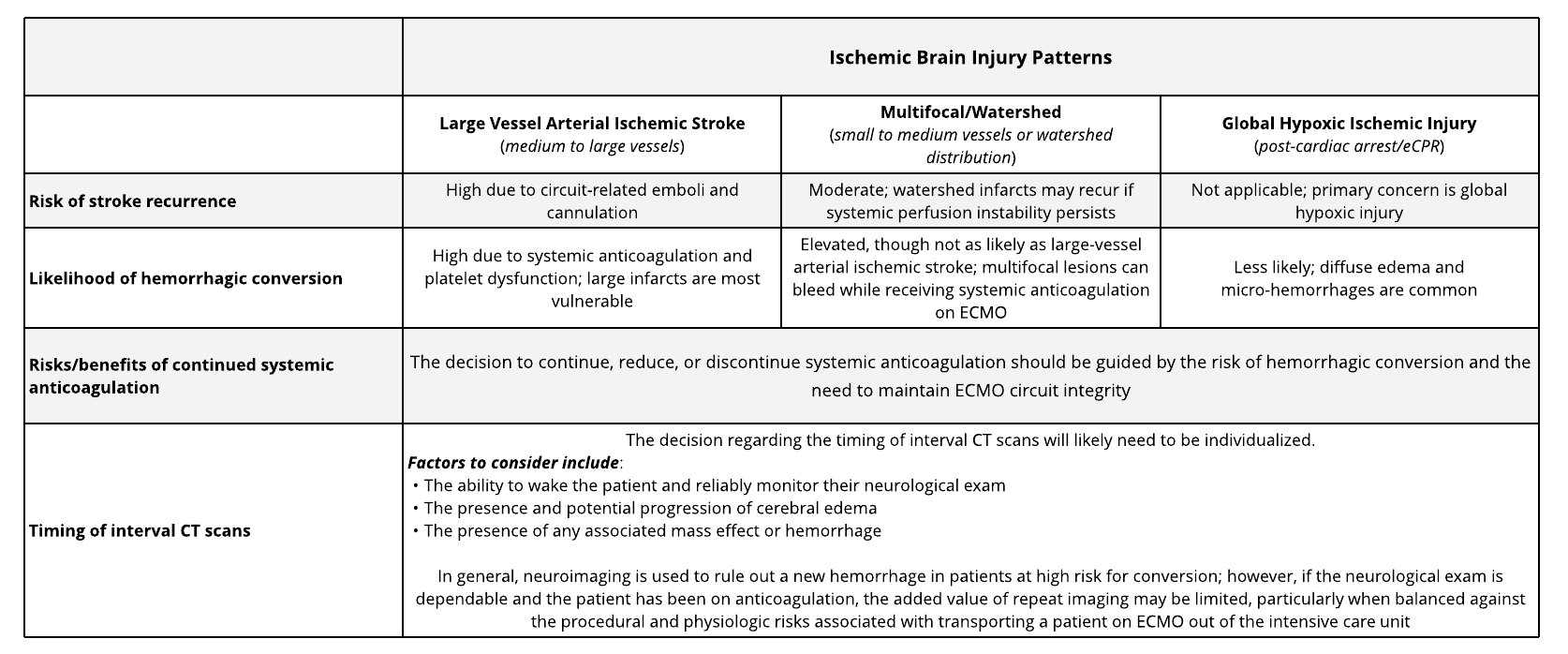
Guidance on Ischemic Brain Injury Patterns for Pediatric Patients on ECMO
References
Alexander PMA, Bembea MM, Cashen K, et al. Executive summary: The Pediatric Extracorporeal Membrane Oxygenation Anticoagulation CollabortivE (PEACE) consensus conference. Pediatr Crit Care Med. 2024;25(7):643-675. doi:10.1097/PCC.0000000000003480
Boulouis G, Fox CK, Waak M, et al. Pediatric intracerebral hemorrhage management—consensus statement of the International Pediatric Stroke Organization—Part 1: acute phase and workup. J Am Heart Assoc. 2026;15:e039595. doi:10.1161/JAHA.124.039594
Fowler JC, Morgan RW, O’Halloran A, et al. The impact of pediatric post-cardiac arrest care on survival: A multicenter review from the AHA Get With The Guidelines®: resuscitation post-cardiac arrest care registry. Resuscitation. 2024;202:110301. doi:10.1016/j.resuscitation.2024.110301
Hirsch KG, Amorim E, Coppler PJ, et al. Part 11: Post-cardiac arrest care: 2025 American Heart Association guidelines for cardiopulmonary resuscitation and emergency cardiovascular care. Circulation. 2025;152(suppl 2):S673-S718. doi:10.1161/CIR.0000000000001375
Khanduja S, Kim J, Kang JK, et al. Hypoxic-ischemic brain injury in ECMO: Pathophysiology, neuromonitoring, and therapeutic opportunities. Cells. 2023;12(11):1546. doi:10.3390/cells12111546
Prokupets R, Kannapadi N, Change H, et al; HERALD Investigators. Management of anticoagulation therapy in ECMO-associated ischemic stroke and intracranial hemorrhage. Innovations (Phila). 2023;18(1):49-57. doi:10.1177/1556984522114170
Themas K, Zisis M, Kourek C, et al. Acute ischemic stroke during extracorporeal membrane oxygenation (ECMO): A narrative review of the literature. J Clin Med. 2024;13(19):6014. doi:10.3390/jcm13196014
Topjian A, deCaen A, Wainwright MS, et al; American Heart Association Emergency Cardiovascular Care Science Subcommittee; American Heart Association Emergency Cardiovascular Care Pediatric Emphasis Group; Council on Cardiopulmonary, Critical Care, Perioperative and Resuscitation; Council on Cardiovascular and Stroke Nursing; Council on Clinical Cardiology; Council on Genomic and Precision Medicine; and Stroke Council. Pediatric post-cardiac arrest care: A scientific statement from the American Heart Association. Circulation. 2019;140:e194-e233. doi:10.1161/CIR.0000000000000697
These pathways do not establish a standard of care to be followed in every case. It is recognized that each case is different, and those individuals involved in providing health care are expected to use their judgment in determining what is in the best interests of the patient based on the circumstances existing at the time. It is impossible to anticipate all possible situations that may exist and to prepare a pathway for each. Accordingly, these pathways should guide care with the understanding that departures from them may be required at times.