
Get updates
Have a parenting hack to share? Or a topic you'd like to see?
E-Bike safety for kids: How to ride smart

Contributing Authors
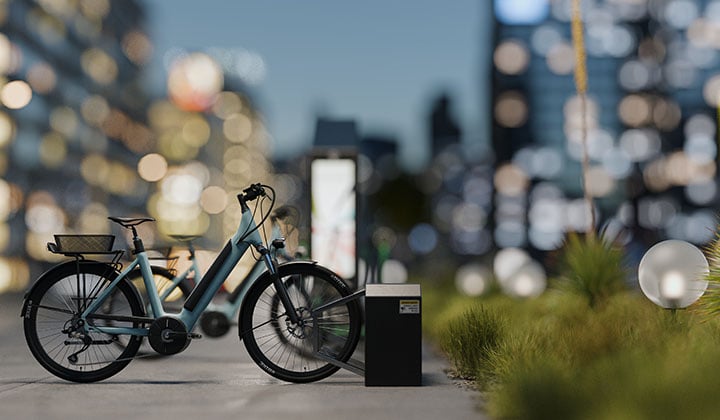
Electric bikes are everywhere these days. They can help kids get around faster, spend more time outside and even make family bike rides a little easier. But with that extra speed comes extra responsibility.
If your kid has been asking for an e-bike, you're not alone. Before they hit the road, it's important to understand the safety risks and how to help them ride smart.
Why e-bike safety matters
An e-bike may look like a regular bike, but it can travel much faster. That means riders have less time to react to cars, pedestrians and obstacles. And that’s why e-bike safety deserves extra attention.
For kids and teens who are still building riding skills and learning good judgment, that extra speed can increase the risk of crashes and serious injuries. Clear guidance about e-bike safety for kids helps match bike type and speed to their abilities.
The good news? A few simple safety habits can help lower the risk and keep rides fun.
Age guidelines for kids and e-bikes
Age recommendations vary by local law and by e-bike type. As a general guideline for kids and e-bikes:
- Under 12: Stick to traditional bicycles on private property with close supervision. This supports skill-building and aligns with basic bicycle safety.
- Ages 12–14: Many kids can start with lower-power pedal-assist (Class 1) e-bikes on bike paths or quiet streets, depending on local rules and maturity. This is often the earliest appropriate window for pedal-assist e-bikes.
- Ages 14–16: With experience and after practicing braking, turning and hazard scanning, teens may be ready for Class 2 (throttle up to 20 mph) where legal. This is typically the age range when throttle-powered e-bikes may become appropriate.
- 16 and up: In many regions, Class 3 (pedal-assist up to 28 mph) is restricted to riders 16+. Even then, strong riding skills and strict adherence to e-bike safety are essential.
In short: The proper age for kids for an e-bike depends on bike class, local regulations and the child’s maturity. A child can safely ride an electric bike when they demonstrate consistent control, understand traffic rules and follow bicycle helmet safety every ride.
If you’re still unsure, this guide walks you through an e-bike readiness checklist.
Start with the right gear
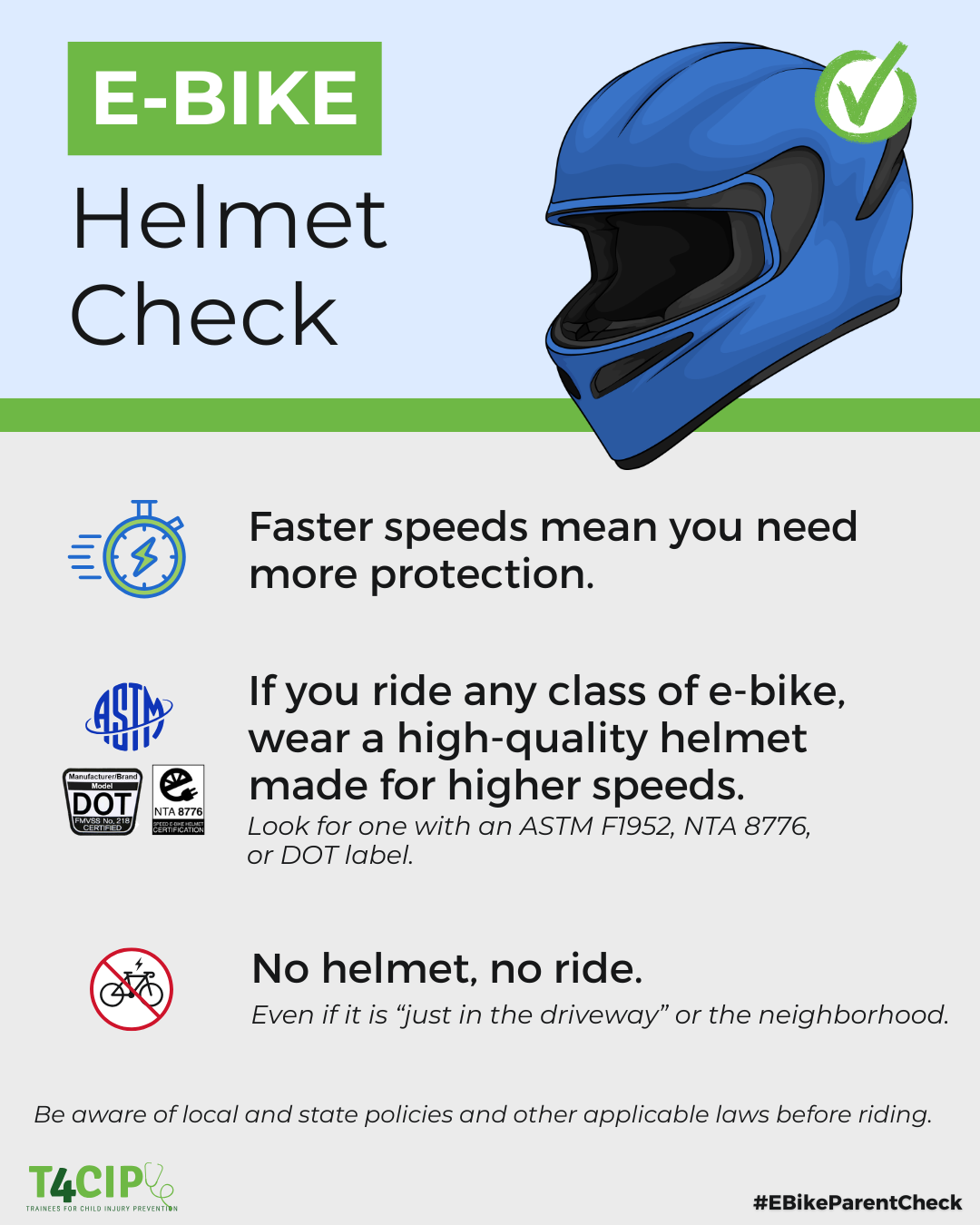
Let's start with the easiest safety win: a helmet. Bicycle helmet safety is non-negotiable for kids riding e-bikes. A properly fitted helmet can help protect your kid's head if they fall or crash. Make sure it sits level on their head and fits snugly without wobbling. Reinforce bicycle helmet safety by modeling good habits yourself. E-bikes also require special helmets given their increased speed. The graphic indicates what to look for:
Other helpful gear includes:
- Bright or reflective clothing
- Closed-toe shoes
- Bike lights for riding at dawn, dusk or night
- Reflectors on the bike
Think of it this way: the easier your kid is to see, the safer they'll be. Simple gear choices support e-bike safety for kids every time they ride.
Know the rules before they ride
Every community has different rules for e-bikes. Take a few minutes to review local regulations before your kid heads out and discuss with them where they can safely ride an e- bike in your area.
Talk about:
- Where e-bikes are allowed
- Traffic signs and signals
- Yielding to pedestrians
- Riding with the flow of traffic
- Safe crossing practices
A quick conversation today can help prevent a scary situation tomorrow.
Practice before hitting busy streets
Getting comfortable on an e-bike takes time. Before your kid rides in traffic, encourage them to practice in a safe area like an empty parking lot or quiet neighborhood street.
Help them learn how to:
- Start and stop smoothly
- Turn safely
- Use brakes correctly
- Control speed
- Watch for hazards
Confidence is great. Practice is better—and it’s central to e-bike safety for kids.
Keep speed in check
Let's be honest. Speed is part of the appeal. But one of the best lessons parents can teach is that faster isn't always better.
Encourage your kid to ride at a speed that matches their skill level and surroundings. Crowded trails, sidewalks and neighborhood streets all require extra caution. A good rule of thumb: if it feels too fast to react safely, it probably is.
Avoid distractions
Phones and bikes are not a great mix. Remind kids to keep their eyes on the road and their hands on the handlebars. That means no texting, scrolling or wearing headphones that block important sounds like traffic or emergency vehicles.
Staying alert is one of the most powerful safety tools for kids riding e-bikes.
Set family riding expectations
Every family has different comfort levels. Creating a few clear rules can help everyone stay on the same page. Consider setting expectations around:
- When and where riding is allowed
- Helmet use
- Riding with friends
- Phone use
- Night riding
- Checking in when arriving at a destination
The goal isn't to take away the fun. It's to make sure kids can keep enjoying it safely.
E-bikes can be a great way for kids and teens to get outside, gain independence and explore their communities. Like any ride with wheels, safety comes first.
With the right gear, practice and family rules—plus attention to bicycle helmet safety and local age laws—your kids can enjoy the benefits while reducing the risk of injury.
Get updates
Have a parenting hack to share? Or a topic you'd like to see?
Related Posts
- Hitting and biting: what parents need to know
- Debunking myths about COVID-19
- How to promote diversity and inclusion in your child’s life
- What every parent should know about preventing child trafficking
- The No. 1 rule about cleaning out earwax
- Food allergies: are more kids allergic to food or are we just more aware?
- Bedwetting: What causes it and when to be concerned?
- The great cover-up
- All about strep throat
- A parent’s guide to discussing white privilege