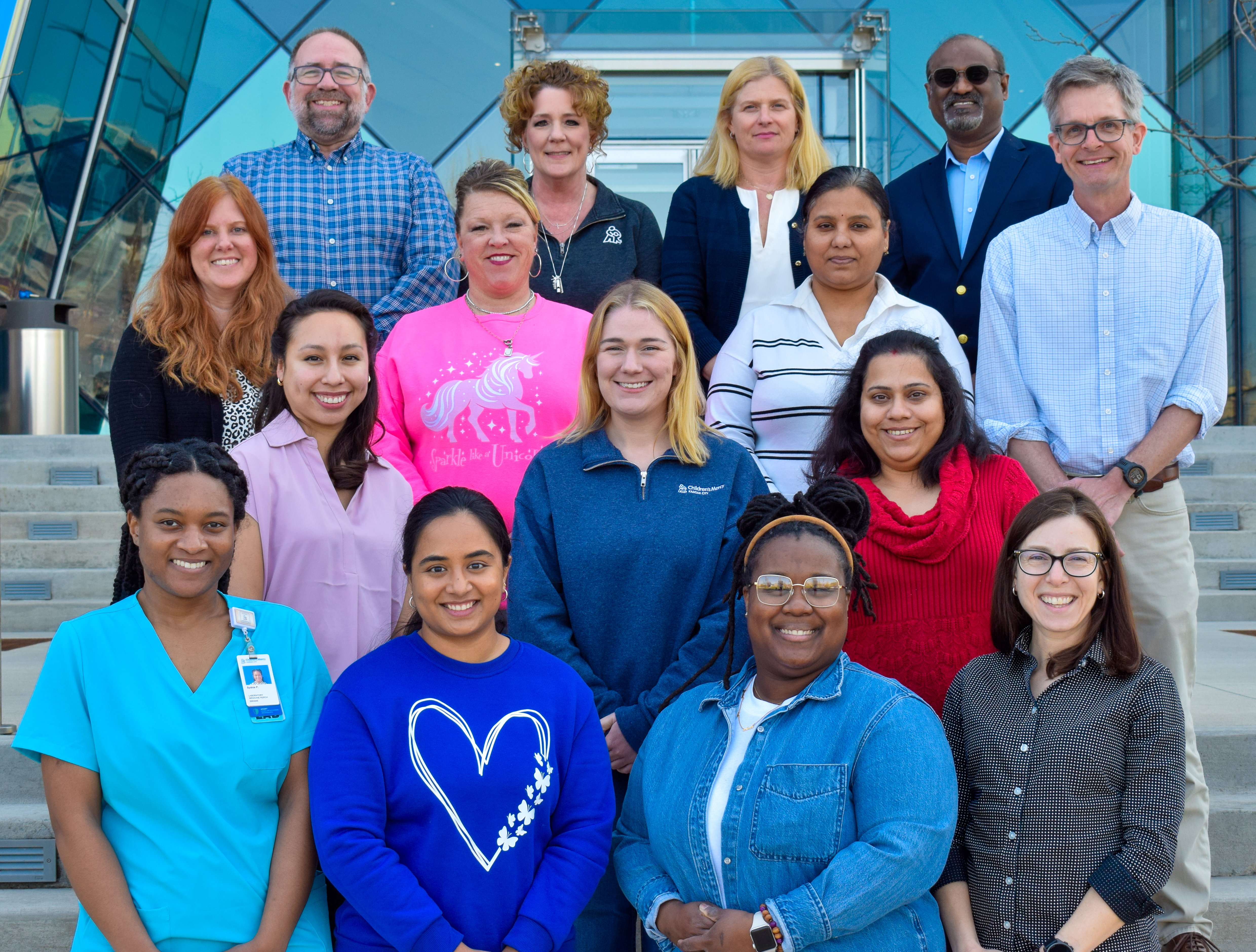
The scientists from Emerging Infections and Division of Infectious Diseases are highly focused on clinical and translational research, team-based science and collaborative scientific studies.
ID/Emerging Infections FY25 Awards
| Division of Infectious Diseases | Emerging Infections AOE | |
| New Awards (FY25) | $640,000 (4 total) | $3,155,131 (8 total) |
| Total Active Awards (FY25) | $4,742,345 (13 total) | $4,099,386 (23 total) |
Emerging Infections was added to the Children’s Mercy Areas of Emphasis (AOE) in 2022. The AOEs consist of transdisciplinary, collaborative teams who work together on goals that promote and disseminate translational research. The centralized purpose of the AOEs is to help improve child-centric care and individual wellbeing. The goal of the Emerging Infections AOE is to understand infectious diseases early on, and thereby protect children.
This approach promotes collaboration among multiple departments and divisions, including Infectious Diseases, Emergency Medicine, Laboratory Medicine, Genomic Medicine and Immunogenetics, Population Health, Neonatology, Adolescent Medicine, Nephrology, Gastroenterology and Precision Therapeutics.
Clinical and translational studies affect patient care
We touch multiple clinical groups, and we try to work with all of them to say, 'How do we promote overall health and prevent all of these infections from happening?'
About 90% of what infectious diseases researchers do is clinical and translational research, according to Rangaraj Selvarangan, PhD, BVSc, D(ABMM), FIDSA, F(AAM), Division Director of Emerging Infections and Director of Microbiology and Virology Laboratories, Pathology and Laboratory Medicine.
With a bench-to-bedside focus, the most important research is the kind that integrates the clinical and science sides, explained Dr. Selvarangan. This type of research ultimately strives to improve patient care and the child’s wellbeing. By collaborating with different clinics, departments and divisions, Dr. Selvarangan hopes to help patients find answers quickly and improve the patient care experience and workflow for infectious disease management.
Collaboration is key
Scientific research revolves around collaboration among other researchers, administrators, clinicians, patients and the community. Dr. Selvarangan emphasized how infection is one of the leading causes for hospitalization and that a child may be in a different Children’s Mercy department with an infection. Based on this, it is important to collaborate to learn more about infections and help pediatric patients.
“We touch multiple clinical groups, and we try to work with all of them to say, ‘How do we promote overall health and prevent all of these infections from happening?’” said Dr. Selvarangan.
Kansas City-New Vaccine Surveillance Network
The Kansas City-New Vaccine Surveillance Network (KC-NVSN) is a Centers for Disease Control and Prevention (CDC) funded program established in 2009 by Dr. Selvarangan and continually funded through 2026. For this funding period, between 2021 and 2026, Jennifer Schuster, MD, MSCI, Pediatric Infectious Diseases, is the co-Principal Investigator.
The KC-NVSN program is currently surveying and collecting samples from enrolled Children’s Mercy patients for both acute gastroenteritis and acute respiratory illness. This program helps collect data and share information on findings, so the industry can prepare vaccines for the next respiratory season. In 2025, the program dealt with an influx of respiratory syncytial virus (RSV), SARS-CoV-2 (COVID-19), influenza and the bacterial pathogen, Mycoplasma pneumoniae.
School Knowledge of Infectious Diseases in Schools
School Knowledge of Infectious Diseases in Schools (School KIDS) is a community-based research study led by Dr. Schuster, Jennifer Goldman, MD, MS-CR, Pediatric Infectious Diseases, Clinical Pharmacology, and Dr. Selvarangan.
School KIDS 2.0 started in February 2024 with a focus on respiratory viruses in North Kansas City Schools. The program describes a baseline viral epidemiology in students, staff and the air, and correlates whether there is an association to self-reported symptoms, absenteeism, medical seeking behaviors, etc. After that, the team determines if school environmental upgrades — such as air cleaners or germicidal UV light — affect epidemiology. However, there is no one-size-fits-all solution, since every school has different equipment and capacities, so the School KIDS team hopes to make recommendations for each individual school based on their findings.
The School KIDS 2.0 program found that a respiratory virus can be detected in 25% of people in schools when tested with a highly sensitive PCR test. While this does not mean a person is sick or contagious, it gives the team a starting point to understand what is happening in schools. Air sampling in schools has confirmed that viruses can be found in the air prior to anyone testing positive for a virus. This not only helps staff understand the air quality in schools but can also predict when Children’s Mercy physicians may see an influx in flu and other respiratory illnesses in the community. This program is the second part of School KIDS 1.0, which focused on COVID-19 in schools from 2022 to 2023.
Collaboration beyond fellow researchers
We have found very much that people like to be a part of research. They want to know what's going on with research; they want to know the results and that really helps with engagement.
The infectious diseases division is constantly collaborating with Research and Sponsored Projects Administration (RaSPA), the Office of Research Integrity, the Institutional Review Board, the CDC and other entities. Dr. Goldman, Dr. Schuster and Dr. Selvarangan have received large contracts and grants with complicated management requirements.
Luckily, the RaSPA team members can help shorten the turnaround time and help the researchers through the contract process.
Outside of Children’s Mercy, Dr. Selvarangan highlighted the infectious diseases team’s longstanding relationship with the CDC, dating back to the beginning of the KC-NVSN. The Emerging Infections team is composed of highly skilled and dedicated research scientists, laboratory professionals and study coordinators who exemplify team science in their collaborative efforts to investigate, diagnose and prevent infections in children.
Besides the CDC, Susana Chavez-Bueno, MD, Infectious Diseases, and Dr. Selvarangan have set up a new national collaborative with six other U.S. pediatric institutions to investigate neonatal Escherichia coli antimicrobial resistance and molecular epidemiology.
Community-based studies reliant on participants
Research is always evolving. Dr. Schuster explains how her focus was within a lab setting or inviting participants to the hospital to participate in a trial or study. However, Dr. Schuster has noticed an influx in community-based research conducted outside of the hospital walls. “People are trying to get research out of the hospital and into the community,” she said.
People are trying to get research out of the hospital and into the community.
In recent years, the infectious diseases team has conducted many community-based studies reliant on participants. The department’s community-based studies would be non-existent without families, schools and partnerships outside of Children’s Mercy.
Community-based research continues to impact the infectious diseases department. Dr. Goldman and Dr. Schuster explained how, without the community, School KIDS 1.0 or 2.0 would be nonexistent. “We have found very much that people like to be a part of research,” said Dr. Goldman. “They want to know what's going on with research; they want to know the results and that really helps with engagement.”
What else is going on in ID research?
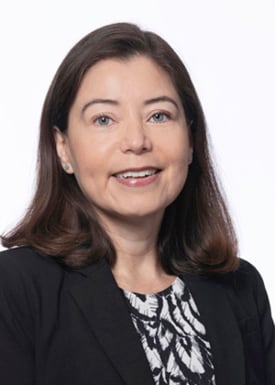
Susana Chavez-Bueno, MD
Professor of Pediatrics
Infectious Diseases
Years at Children's Mercy: 8
Number of studies as a PI (FY25): 4
Research Interests:
- E. coli molecular epidemiology
- Extra-intestinal invasive E. coli infections
- Neonatal sepsis
- Prebiotics and probiotics

Dithi Banerjee, PhD, MS
Research Scientist, Research Manager Laboratory Medicine Research
Years at Children's Mercy: 9
Number of studies as a PI (FY25): 3
Research Interests:
- Clinical microbiology & in vitro diagnostics
- Epidemiology & surveillance
- Pediatric infectious diseases
- Translational research