Some children with cancer have lower five-year survival rates than other children. This is due to a variety of reasons including social drivers of health like access to care, time of diagnosis and limited engagement in therapeutic research trials. Children’s Mercy researchers are honoring International Pediatric Cancer Day by working to ensure children from all backgrounds have opportunities to engage in pediatric cancer research.
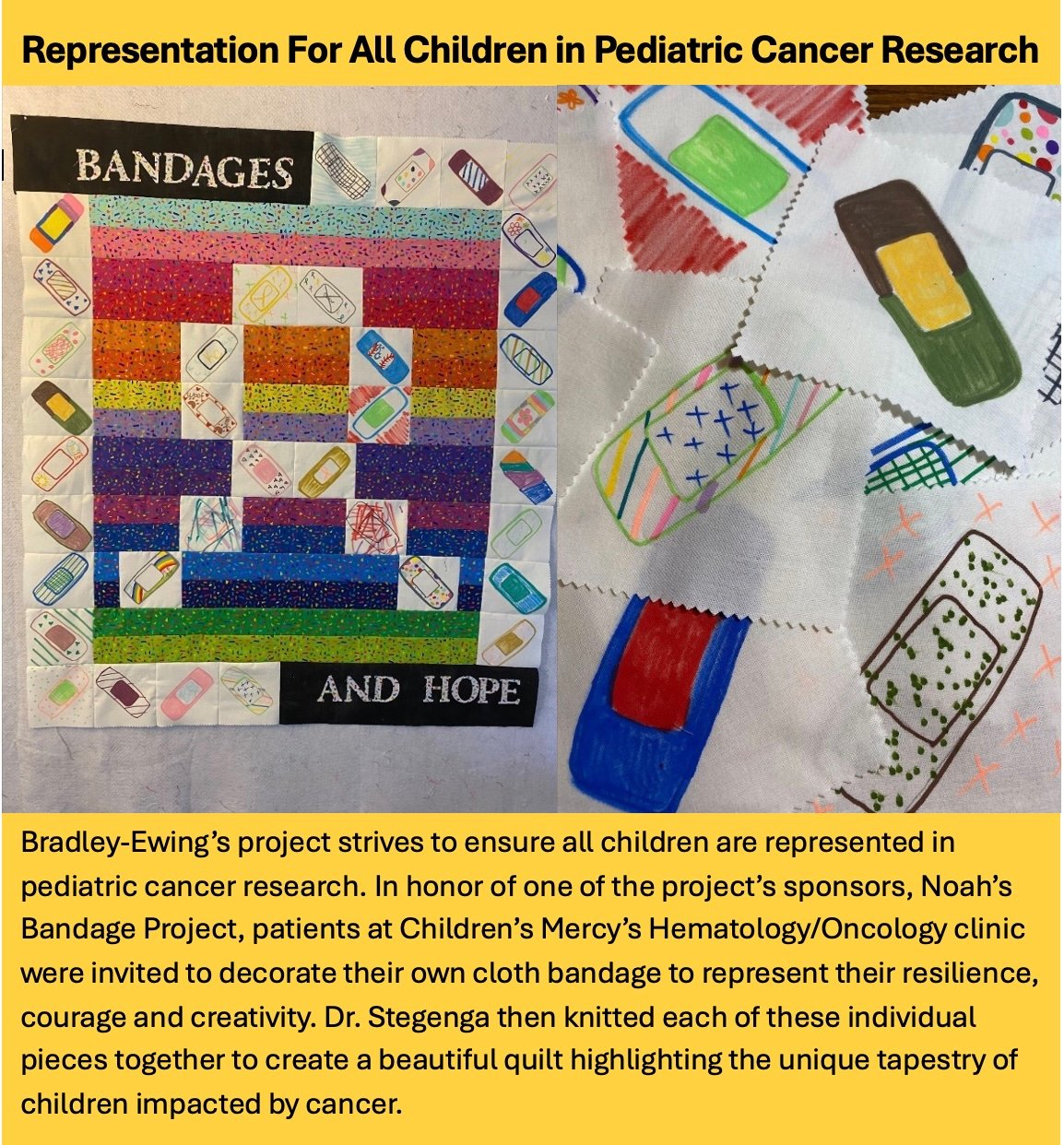
Andrea Bradley-Ewing, MPA, MA, Senior Director, Community Engaged Research, Health Services and Outcomes Research, and her team received funding from Noah’s Bandage Project and Johnson & Johnson Innovative Medicine to investigate the gap in pediatric cancer research engagement and create a toolkit that helps reduce barriers potentially affecting participation rates. Bradley-Ewing’s team, which includes co-investigators, Joy Fulbright, MD, Hematology/Oncology/BMT; Kristin Stegenga, PhD, RN, Hematology/Oncology/BMT; Karynn Glover, PhD, Health Services and Outcomes Research; and Kathy Goggin, PhD, San Diego State University, interviewed oncology professionals across the country to identify facilitators and barriers to engaging all children in pediatric cancer research. The team is using what they learned from these interviews to develop a toolkit with materials for patients, families and research teams to increase interest and engagement in pediatric cancer research.
"We want all children with cancer to grow to become healthy adults,” said Bradley-Ewing.
Why is it important for children with different backgrounds to be involved in cancer research? Most cancer research studies are done with adults. Less is known about cancers that affect children, especially children from historically underserved communities. To improve cancer outcomes for all children, it is important that all children, regardless of where they live, their background, ethnicity, income or language, have opportunities to participate in research.
Once complete, the toolkit will include the following materials:

- Videos of families and survivors sharing their personal experience with pediatric cancer. These videos include stories from members of Children’s Mercy’s Hematology/Oncology Patient and Family Advisory Council or Family Advisory Board like Erika and Roman Harris, as well as Children’s Mercy faculty and staff Angela Myers, MD, MPH, Chief Wellbeing Officer, and Ileana Cepeda, MPH, Clinical Research Coordinator.
- Brochures in English and Spanish with patient and family-centered information on cancer research.
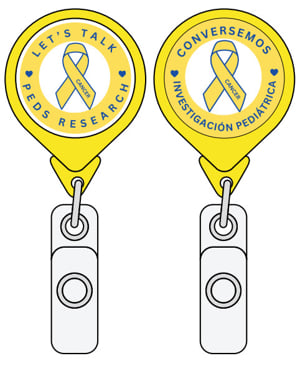
- Badge reels for oncology faculty and staff to encourage communication about pediatric cancer research.
- Communication tips for research teams to help overcome communication challenges when talking to families about pediatric cancer research.
COMMUNICATION TIPS FOR RESEARCHERS FROM TOOLKIT
- Express empathy: Acknowledge the family’s feelings during this difficult time.
- Share goals: Our goal is to find the best possible treatment for [child’s name].
- Introduce research: For some patients, investigational treatments work to fight their cancer.
- Describe the research process: Who/ What/ When/ Where/ Why.
- Provide written materials.
- Check-in and questions: What are your thoughts and questions for me?
- Provide contact information: Phone, email and patient portal login instructions.
- Closing: Empathy, best possible care and timeline for follow-up.
The Community Engaged Research team will conduct focus groups with community members and surveys with oncology providers to get their input on the toolkit before disseminating materials broadly to pediatric oncology clinics and their patients in the region. They plan to have the toolkit ready for distribution by the end of the summer.
“Many families impacted by childhood cancer are overwhelmed by their child’s diagnosis and have very limited time to make decisions about research participation,” said Bradley-Ewing. “This toolkit will provide families and oncology research teams with educational and communication materials to help families make informed decisions and encourage increased engagement in pediatric cancer research.”