In 2020, the Kansas City Area Transportation Authority (KCATA) transitioned to a zero-fare bus system, the first city in the country to eliminate bus fares citywide.
The program was able to be started, in part, due to COVID relief money. In 2023, the funds ran out, KCATA officially announcing the end of the project in 2025 and, and on June 1, 2026, riders had to again start paying to ride the bus in Kansas City.
In 2022, Jordan Carlson, PhD, Center for Children’s Healthy Lifestyles and Nutrition, and fellow researchers received a multi-year grant from the National Institutes of Health’s National Institute of Diabetes and Digestive and Kidney Diseases to study the possible impact of Kansas City’s zero-fare bus transit on health.
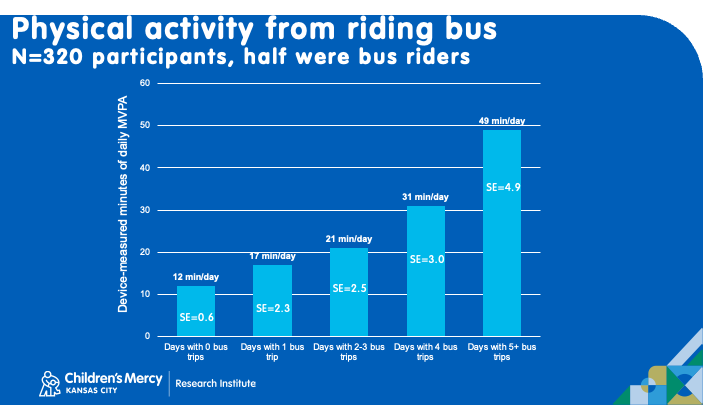
The study, which used a natural experiment design, collected bus ridership data before and up to three years after zero-fare bus transit went into effect to compare changes in bus ridership in Kansas City to other cities that charge fares to ride the bus. To investigate health information, study participants were recruited from local health systems serving economically disadvantaged residents. Patients’ health information was gathered from the electronic health records before and after the policy was adopted. Researchers had a subsample complete in-depth assessments about their physical activity, their healthy eating, their thoughts on the zero-fare bus transit policy and barriers/facilitators to riding the bus. Children’s Mercy’s Field-Based Physical Activity Measurement Core used wearable monitors to capture when a study participant used public transit and the amount of physical activity associated with each transit trip.
In early June, Dr. Carlson and his fellow researchers had two manuscripts accepted about their findings: “Free buses: Citywide zero fare is associated with increased use of public transit” in the journal Transport Policy and “Engaging Community Residents in Large-Scale Neighborhood Audits for Health Research” in the Journal of Transport & Health. They have a third manuscript that focuses on focus groups that’s currently under review.
In their publication in Transport Policy, the team explained that their study conclusion was that zero fare resulted in a 25 percent increase in ridership in Kansas City and a 20-25 percent increase when considering the four zero fare cities – which, along with Kansas City, were Raleigh, NC; Richmond, VA, and Tucson, AZ. It also found that increased ridership was sustained for several years after the zero-fare program started.
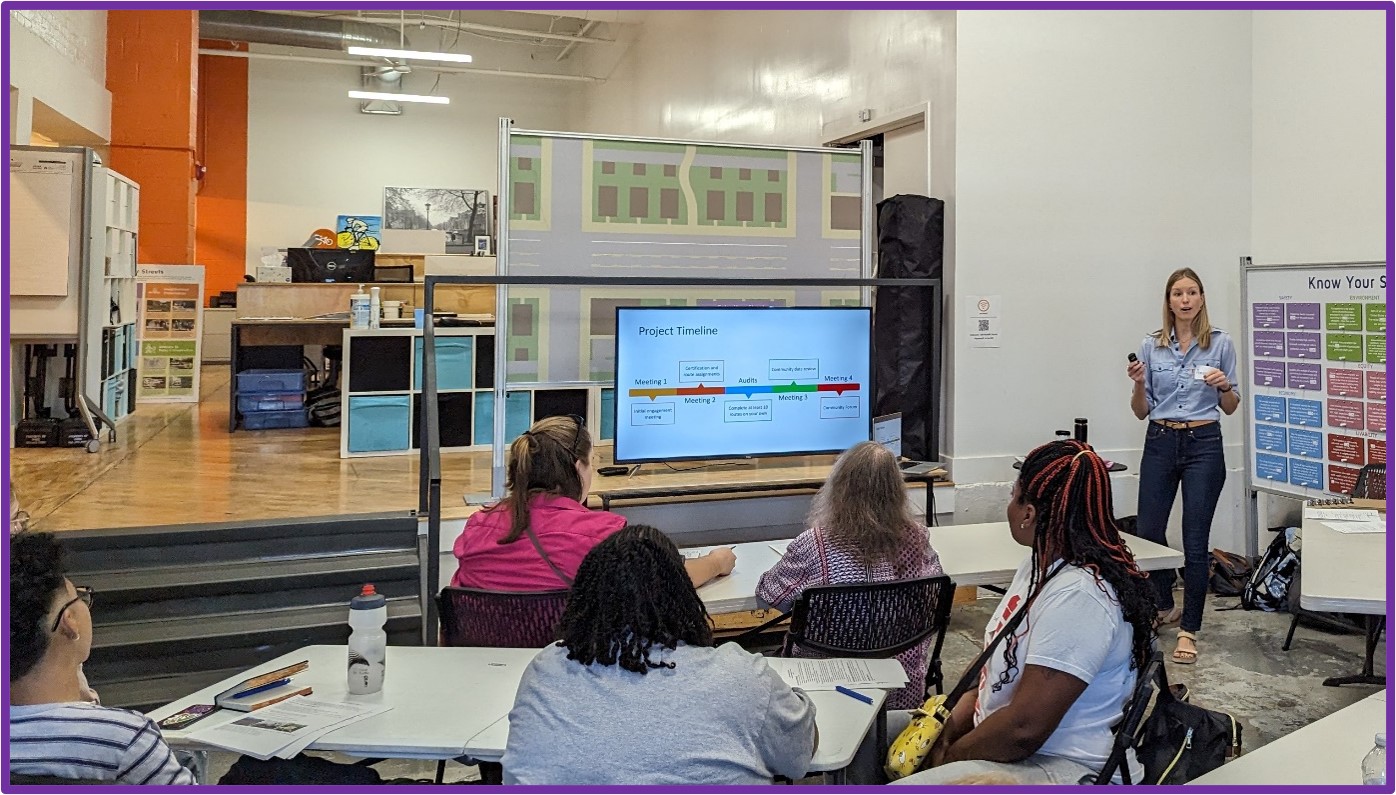
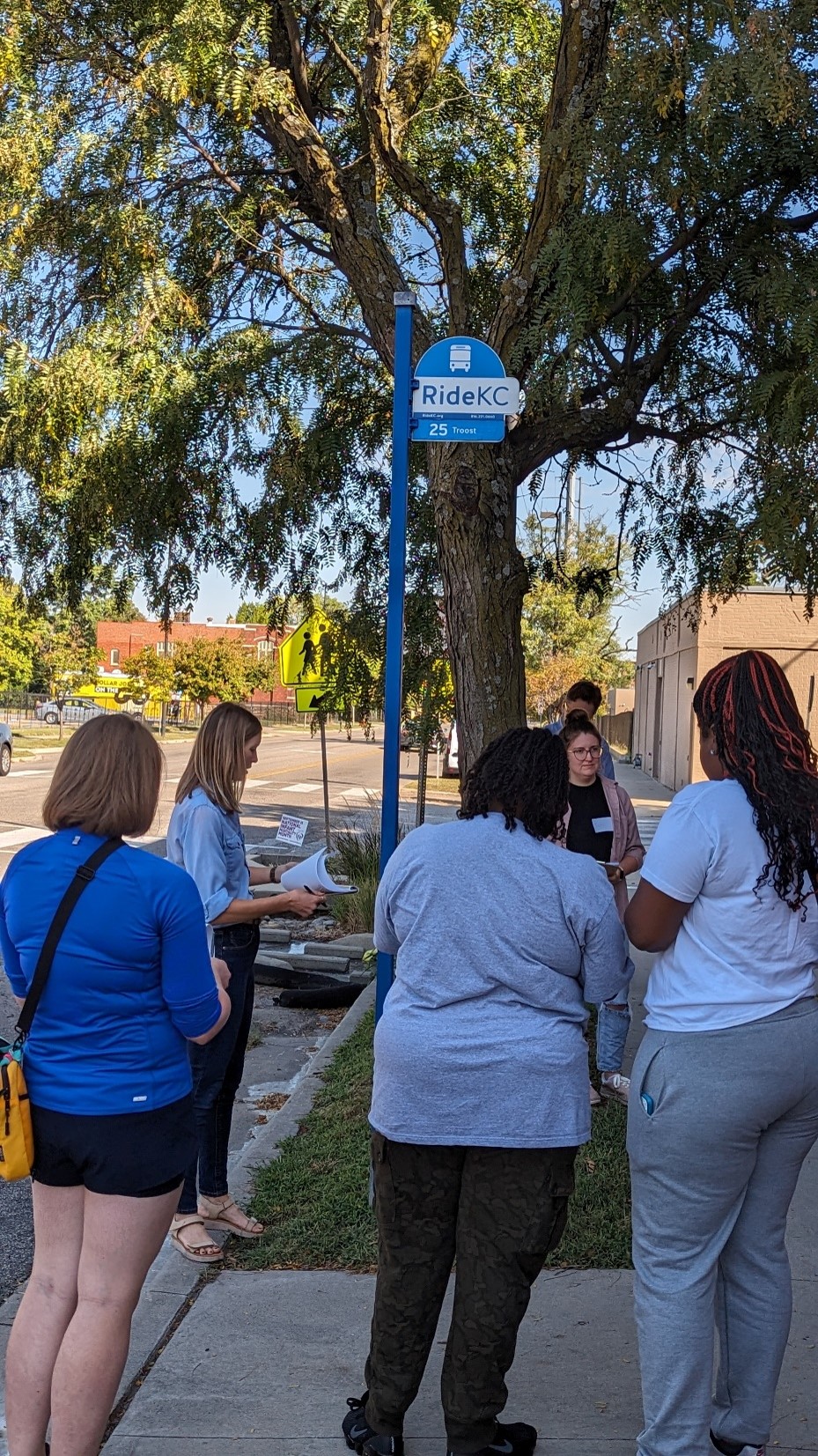
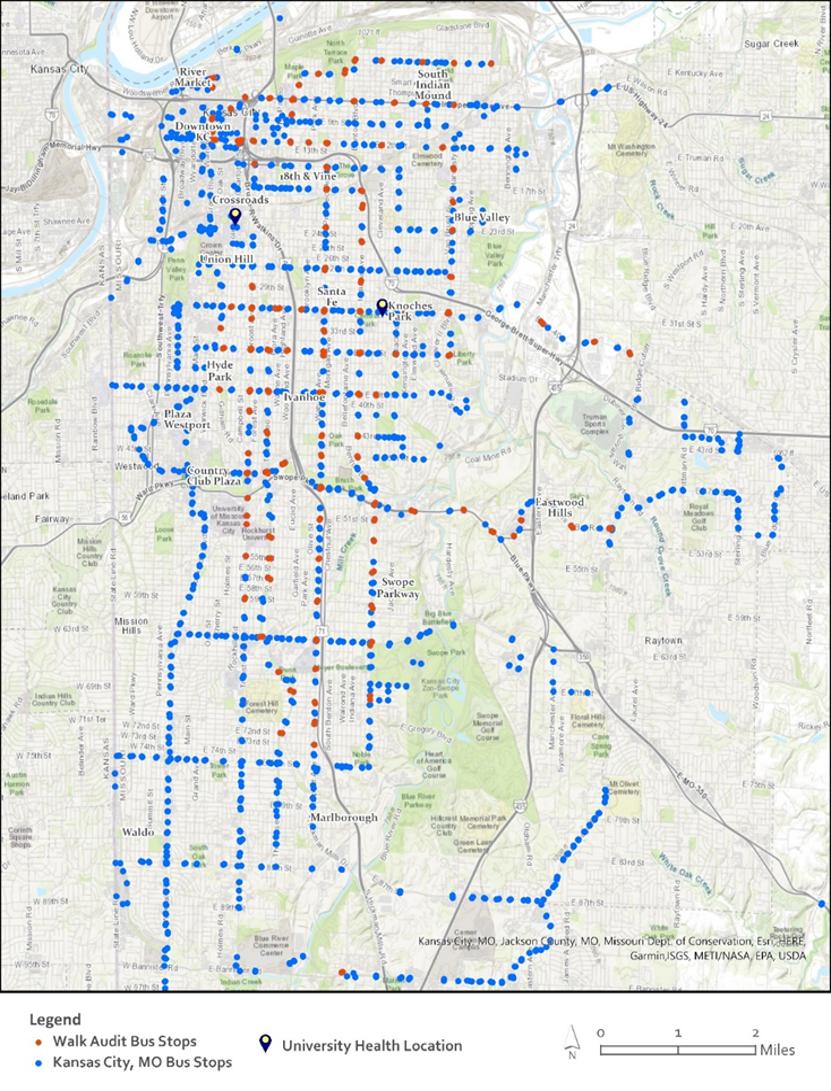
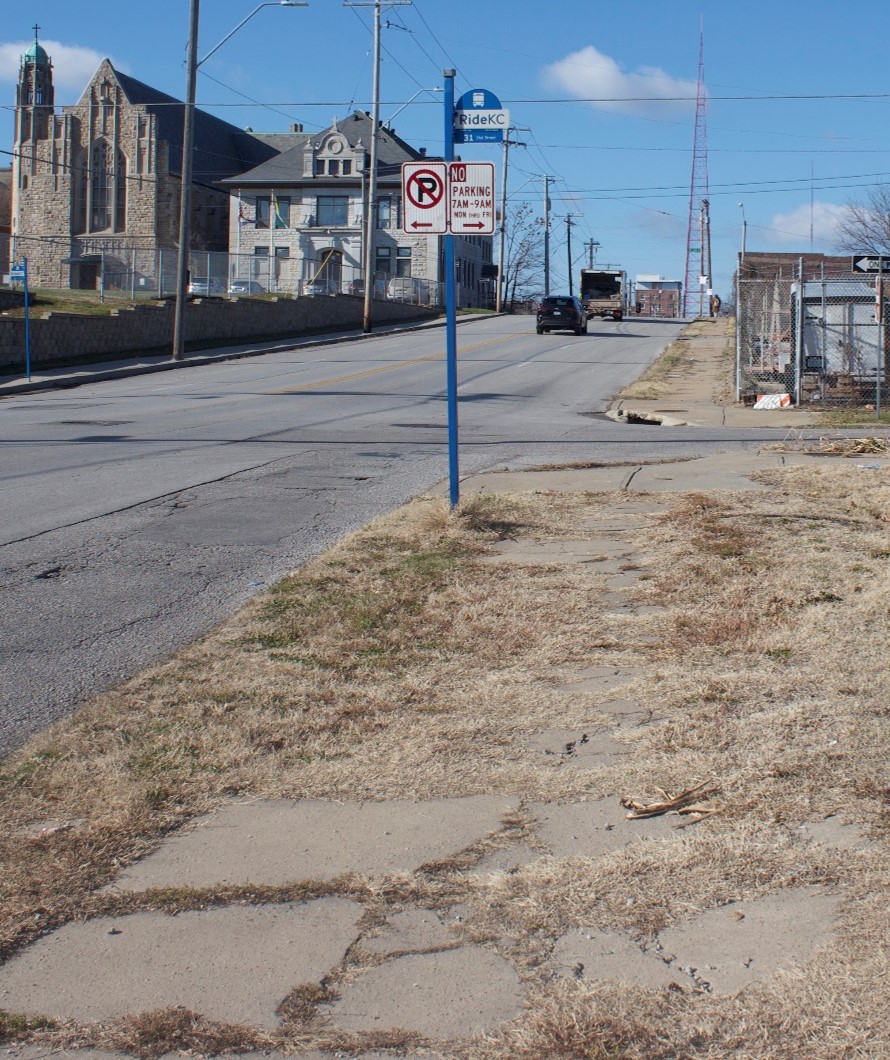
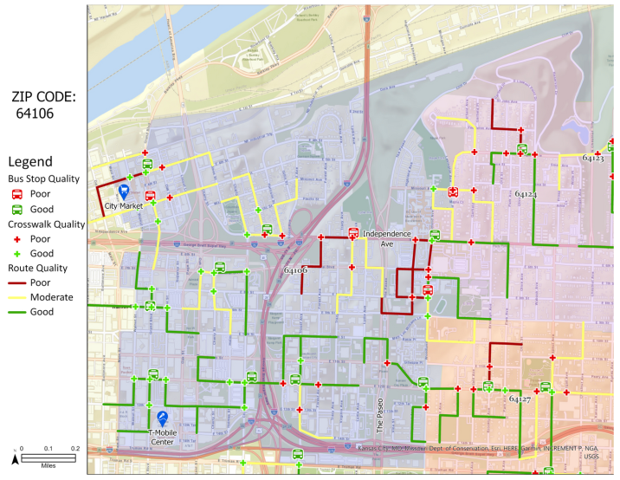
Dr. Carlson said that the community engagement work within their study, outlined in their Journal of Transport & Health publication, was particularly enjoyable as it involved engaging with community members who ride the city bus, learning from their experiences, and exploring their neighborhoods with them. The results: Twenty-five community scientists assessed the conditions of 271 bus stops in Kansas City, including the sidewalks and street crossings around each stop. Community scientists reported increased awareness of neighborhood conditions, identified infrastructure disparities, and contributed to a community-facing report and a dissemination event with local community members and leaders. Community members also shared how zero-fare has impacted them, such as by helping a mother save on transportation costs when needing to take the bus to the grocery store with her two children.
Dr. Carlson and the research team have also presented on various aspects of this study at a number of national and international conferences and developed a new collaboration with a research group in Brazil that is studying citywide zero-fare in Brazilian cities. Some of the findings are still pending, so they don’t have all of the answers yet. The team is currently working on detailed analyses of over five years of health record data from over 3,000 patients, split between regular bus riders and non-riders.
“Through this work, we’ve learned a lot about how public transit and other transportation policies and initiatives can support community health. We continue to hear about other cities interested in zero-fare and have enjoyed sharing our research and learning about their work. Despite the loss of zero-fare in Kansas City, there are many exciting opportunities here to improve health through transportation and community policies that this work can inform,” said Dr. Carlson.
The study investigator team includes Emily Cramer, PhD, at Children’s Mercy, Keith Feldman, PhD, previously at Children's Mercy, and Jannette Berkley-Patton, PhD (Co-PI), Amanda Grimes, PhD, Joey Lightner, PhD, Jenifer Allsworth, PhD, and Betty Drees, MD, at the University of Missouri – Kansas City.
Other Links
“Funding for public transportation: results from a Midwest exit poll” publication in Transportation Research Interdisciplinary Perspectives
“Fare-free public transportation: A systematic review of outcomes” publication in Transportation Research Interdisciplinary Perspectives
“Impacts of zero-fare transit policy on health and social determinants: protocol for a natural experiment study” publication in Frontiers in Public Health
NIH Reporter: Health Impacts of City-Wide Zero-Fare Bus Transit: A Natural Experiment